
What Probate Covers in Sunflower County
Probate is the court-supervised process of proving a will, settling debts, and passing property to heirs. In Mississippi this work belongs to the Chancery Court, the same court that hears divorce, land, and equity matters. Sunflower County has no separate probate court and no separate surrogate or orphans' court. The chancellor presides, and the Chancery Clerk keeps every estate file. That single fact shapes where you look and whom you ask.
Chancery probate and related matters reach a wide range of family and financial questions. The court probates wills and opens estates for people who died without one. It appoints executors and administrators, supervises guardianships for minors or incapacitated adults, and creates conservatorships to manage money and property. It reviews inventories and accountings, oversees creditor notices and claims, and resolves trust disputes connected to an estate. Minor settlements and other restricted financial matters involving children also pass through the chancellor for protection.
Because one court handles all of it, a single estate file can touch wills, real property, bank assets, and family relationships at once. That breadth is why the courthouse index, not a quick web search, remains the authoritative source for Sunflower County probate records.
Probate Terms Defined
Estate paperwork leans on a handful of legal words that decide who controls what. A clear grasp of these terms makes a file far easier to read and a request to the clerk far easier to phrase. The definitions below cover the roles you will meet most often in a Sunflower County probate matter.
- Testator
- The person who made the will. A valid will speaks for the testator after death and names who should inherit.
- Executor
- The person named in the will to carry it out, gather assets, pay debts, and distribute property under the chancellor's supervision.
- Administrator
- The person the court appoints to settle an estate when there is no will or no named executor able to serve.
- Intestate
- Dying without a valid will. Mississippi law of descent then decides who inherits, and the court appoints an administrator.
- Guardianship
- A court arrangement giving an adult legal authority over the person of a minor or an incapacitated individual.
- Conservatorship
- A court arrangement to manage the money and property of someone who cannot handle their own financial affairs.
Sunflower County Chancery Court and Clerk
Two offices share the courthouse at 200 Main Street in Indianola. The Ninth Chancery Court Subdistrict Two is the bench, where Chancellor Debra Giles hears estate, guardianship, and conservatorship petitions. The Chancery Clerk, Gloria McIntosh, is the custodian who files, dockets, and stores the records. For a search you almost always start with the clerk, because the clerk holds the physical files and issues certified copies.
The Ninth Chancery Court Subdistrict Two site outlines the court's role and its public, youth court, and commitment sections at the Subdistrict Two website. Use it to confirm the court that serves Sunflower County before you file or call.
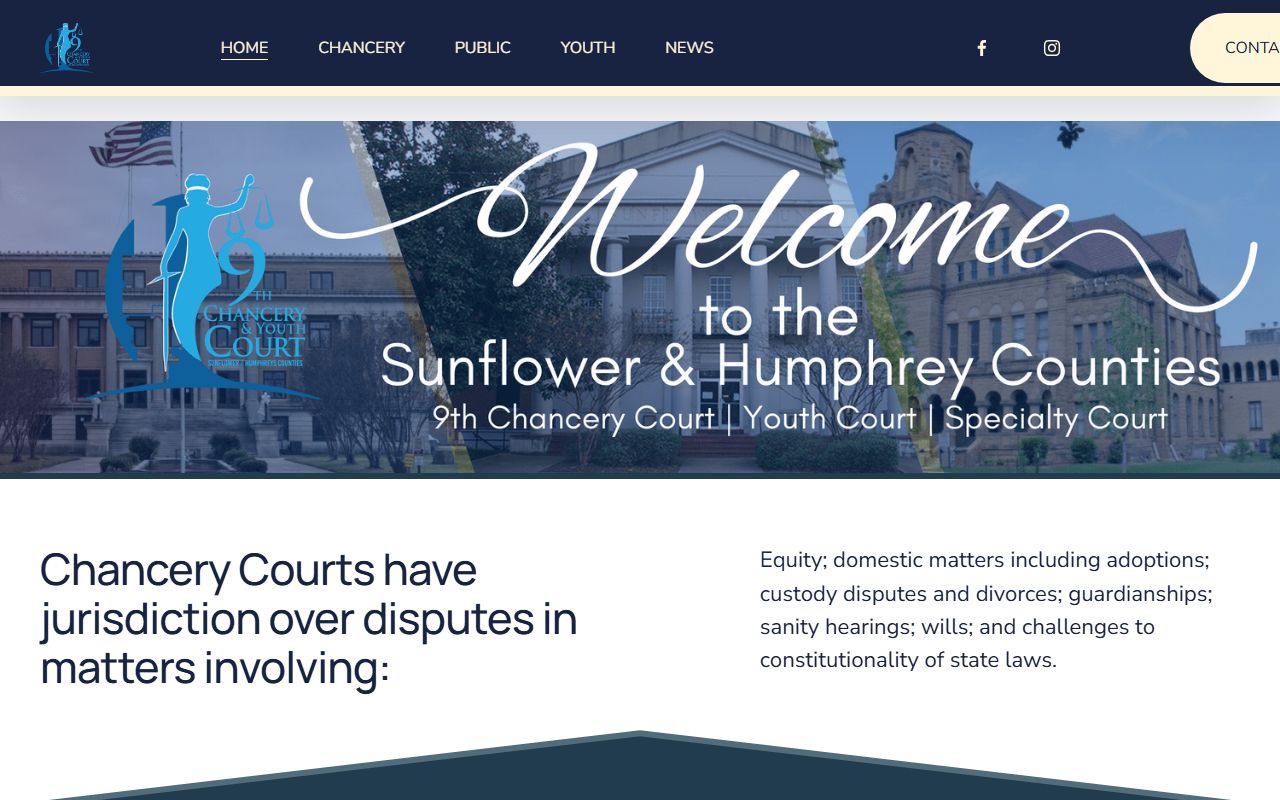
Bench and clerk are distinct, so route your question to the right one. Petitions, hearings, and orders belong to the court; file searches, copies, and fee questions belong to the clerk. The contact cards below give the working details for each office.
Ninth Chancery Court Subdistrict Two
200 Main Street
Indianola, MS 38751
662.887.7070
Chancellor Debra Giles
Sunflower County Chancery Clerk
200 Main Street (P.O. Box 988)
Indianola, MS 38751
662.887.4703
Mon-Fri, 8:00 a.m. to 5:00 p.m.
gmcintosh@sunflowerms.net
Note: the Chancery Clerk also keeps land and Board of Supervisors records, so name probate or estate matters specifically when you call.
How to Search Sunflower County Probate Records
No public Sunflower County probate case portal exists. This point matters, because the county does run a Chancery records website. That site, at duprocess.sunflowerms.net, is a land-records index only, and it carries a disclaimer that the official index is the one kept in the courthouse. It is not a probate case search, and the land portal should never stand in for an estate file lookup. Probate searchers reach the records through the Chancery Clerk instead.
The clerk's office accepts requests in person, by mail, and by phone or email. In person is the strongest channel for older estate files and certified copies. A written request should name the decedent or ward, the date of death, the case number if known, and the exact document you want. The table below maps each channel to how it is used.
| Channel | How to use it | Notes |
|---|---|---|
| Online | No probate-specific portal located | Do not substitute the land-record portal for probate case files. |
| In person | Chancery Clerk, 200 Main Street, Indianola | Best channel for older estate files and certified copies. |
| P.O. Box 988, Indianola, MS 38751 | Include decedent name, date of death, case number if known, and document requested. | |
| Phone or email | 662.887.4703 or gmcintosh@sunflowerms.net | Confirm fees, copy type, and any restrictions before you send payment. |
| Public-record request | Written request to the record custodian | Subject to sealed, minor, and medical restrictions. |
A 2023 Mississippi Judiciary order approved the use of Mississippi Electronic Courts in Sunflower Chancery Court. That milestone lets courts and attorneys file estate matters electronically. It is a filing modernization, not a public search portal, so lay searchers still work through the clerk.
How Probate Works in Sunflower County
An estate moves through predictable stages, even though timelines differ by case. Knowing the sequence helps you understand which document to ask for and when it should appear in the file. The steps below trace a typical Sunflower County estate from opening to closing.
- Determine whether the decedent lived in Sunflower County or owned property here that requires probate in this county.
- Contact the Chancery Clerk for case-opening requirements, fees, and local filing details.
- File the petition with the death certificate, the will if one exists, heir and beneficiary information, and the proposed fiduciary.
- The chancellor reviews the petition and may issue letters testamentary or letters of administration.
- The fiduciary gives required notices, gathers assets, pays valid claims, files inventories or accountings, and asks the court to approve final distribution and closing.
- Guardianship and conservatorship cases add protections for minors or incapacitated adults and may produce restricted records.
Letters testamentary and letters of administration are the documents banks and property holders most often demand. They prove the fiduciary's authority, so they are frequently the first certified copy a family needs from the clerk.
What Sunflower County Probate Files Contain
An estate or guardianship file is a running record of the whole proceeding. It opens with a case number and the main party, then grows as the fiduciary acts and the chancellor signs orders. Some fields are routinely public; others carry sensitive financial or personal detail and may be restricted. The inventory below shows the fields you can expect and how each is treated.
| Field | Expected use | Public or restricted |
|---|---|---|
| Estate or guardianship case number | Identifies the proceeding | Public if not sealed. |
| Decedent or ward name | Main party | Minor or incapacitated-person details may be restricted. |
| Filing date | Opens the probate timeline | Public if not sealed. |
| Petitioner, executor, or administrator | Fiduciary identity | Usually public. |
| Will | Testamentary document | Usually public after probate. |
| Letters testamentary or administration | Authority to act | Often needed by banks and property holders. |
| Inventory and accounting | Estate assets and debts | May contain sensitive financial data. |
| Creditor notice | Required claim notice | Public notice may also run in a newspaper. |
| Final decree or closing order | Ends the estate | Public if not sealed. |
Public Access to Sunflower County Probate Records
Mississippi treats most court files as open under the Public Records Act, Miss. Code Section 25-61-1 and following. A public body must set a response procedure and cannot delay production beyond the statutory limit without a legal basis. For a probate file that means the clerk will produce a non-restricted estate record on a proper written request, then quote any copy or research fee before fulfilling it.
The response-procedure rule under Section 25-61-5 is laid out in the Mississippi legislative bill text for the public-records response statute. It explains the timeline and the duty to respond.
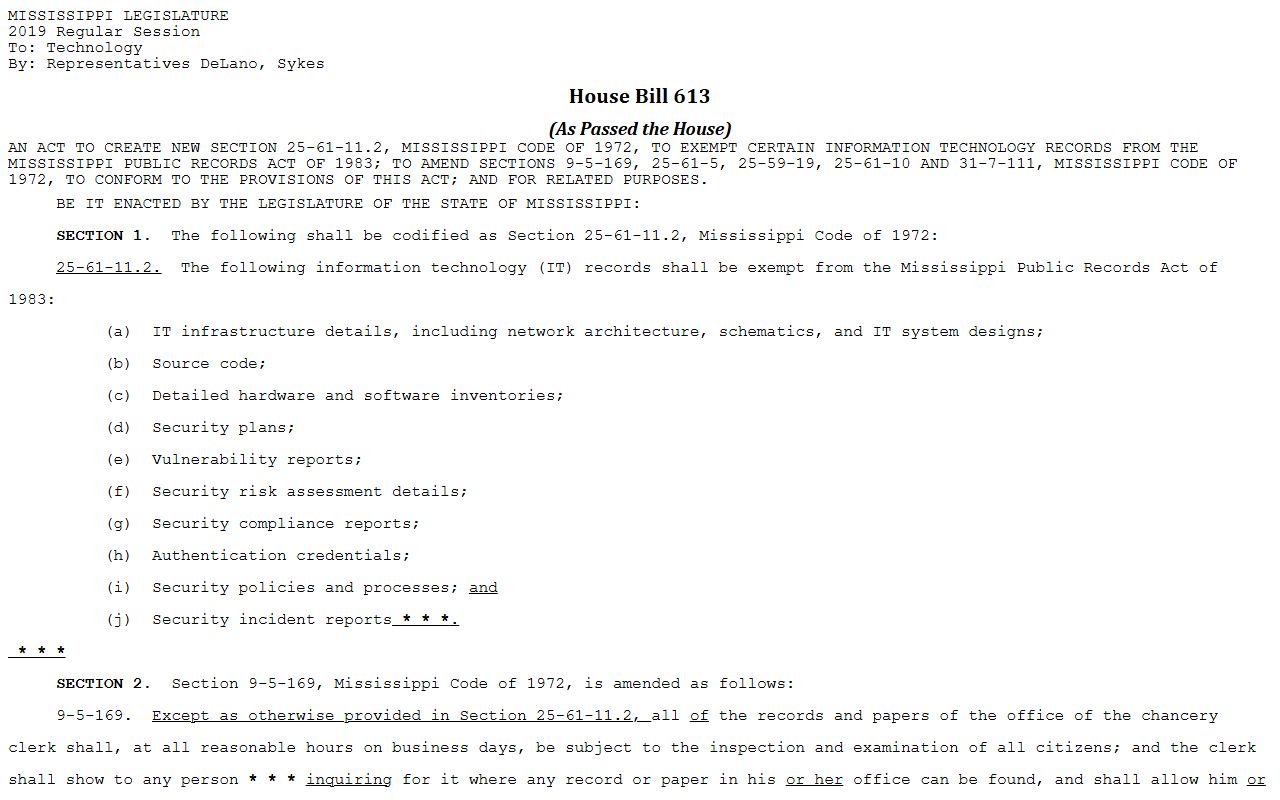
Openness is the default, but it is not absolute. Sealing, redaction of identifiers such as Social Security numbers, and special rules for minors and medical content can limit what leaves the courthouse. When a file mixes public and protected material, the clerk releases what the law allows and withholds the rest.
Restricted Probate and Guardianship Records
Some of the most sensitive chancery matters involve children and incapacitated adults, and the law guards those files closely. Guardianship and minor-settlement records can include names, finances, and personal details that the court protects. Mental-health commitment files, which the chancery side also handles, carry medical and treatment information and are treated as restricted. For any of these, the clerk or court confirms who may view what.
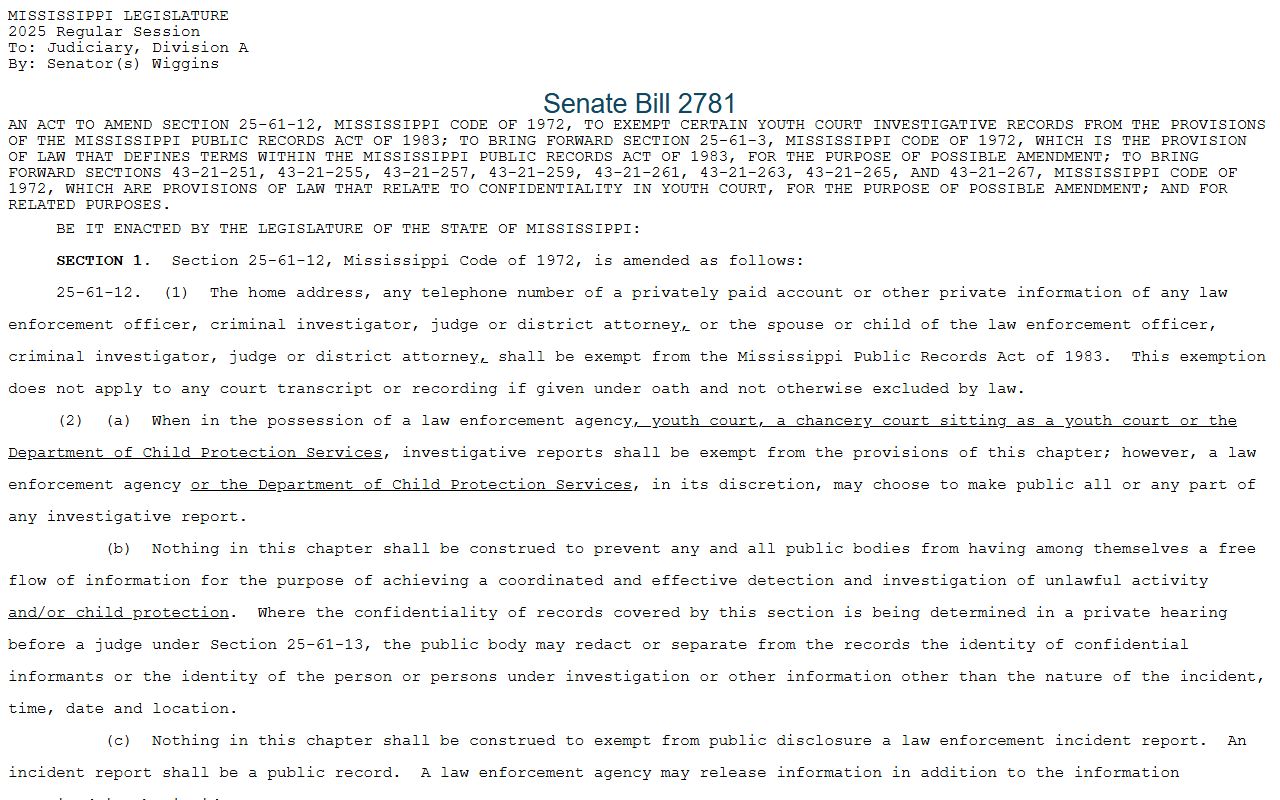
Mississippi limits disclosure of records that concern children in particular. The juvenile law-enforcement records statute, Section 43-21-255, restricts the channels through which children's law-enforcement records may be shared, as shown in the legislative bill text for the juvenile law-enforcement records statute. That confidentiality often overlaps with guardianship and minor matters in chancery.
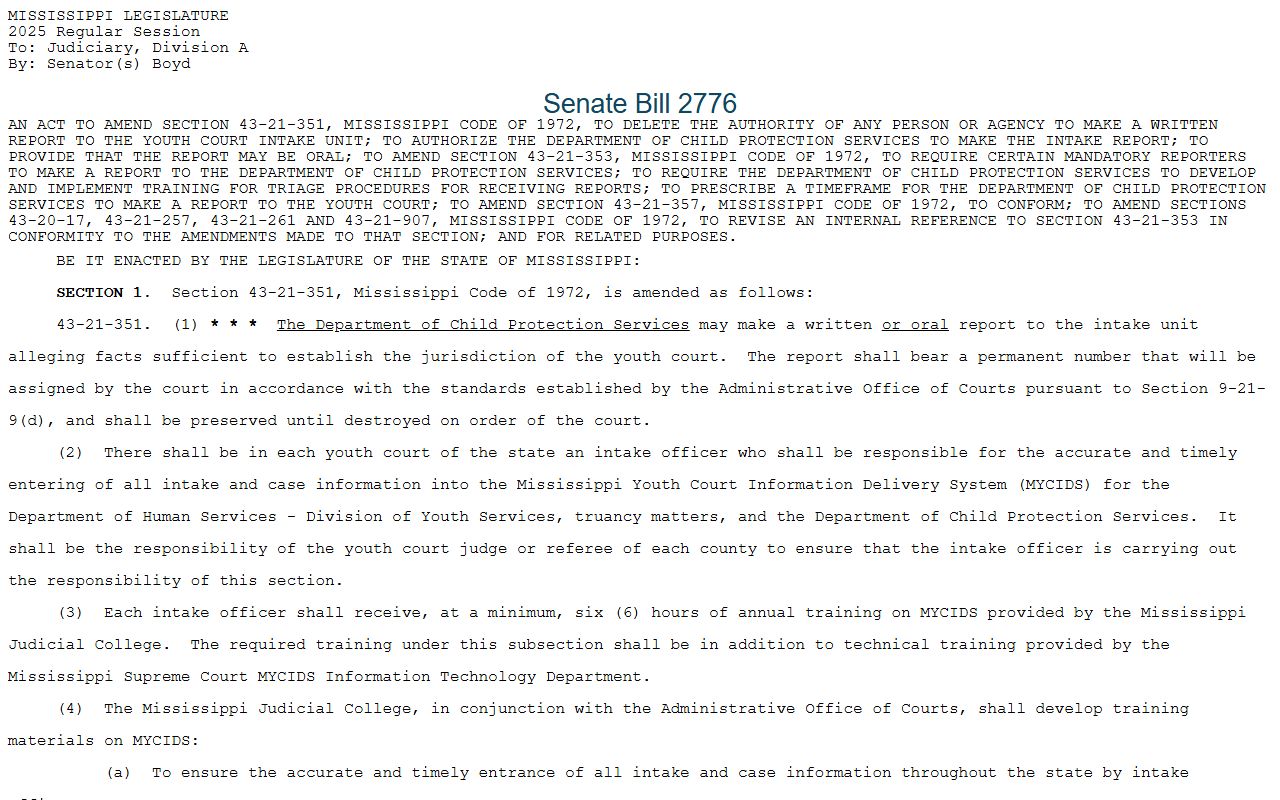
A companion provision, Section 43-21-261, keeps records involving children in youth court generally confidential except for statutory disclosures and court orders. You can read it in the legislative bill text for the records-involving-children statute. Adoption proceedings are likewise confidential and closed, so they are handled in chancery but not treated as a general public record.
The practical rule is simple. If a probate matter touches a minor's identity, a ward's finances, or medical detail, expect redaction or a closed file, and ask the Chancery Clerk what disclosure the statute permits. Closely related family filings appear on the county marriage and divorce records page.
Probate Filing Fees in Sunflower County
Sunflower County does not publish a fixed probate fee schedule in its official sources. Filing costs, certified-copy charges, and research fees are not posted online for the Chancery Clerk's probate work, so any figure quoted by a third party should be treated with caution. The reliable path is to ask the office directly before you file or order copies.
| Item | Amount |
|---|---|
| Probate filing fee | Contact Chancery Clerk |
| Certified probate copy | Contact Chancery Clerk |
| Plain probate copy | Contact Chancery Clerk |
| Research or search fee | Contact Chancery Clerk |
When you call, name the document type and the format you need, since certified copies usually cost more than plain ones. The clerk can confirm current amounts and accepted payment. For broader filing and record questions, the Chancery Clerk page covers the office in full.