
Sunflower County Arrest Records and Court Charges
An arrest record is the record of the arrest itself. It notes who made the arrest, the agency involved, the date, and the booking that follows. In Sunflower County the Sheriff Department books and holds people at the county jail. That booking entry is the front end of the story. It says a person was taken into custody. It does not say what a prosecutor will do next.
The court charge record is the second piece. After an arrest, the prosecutor decides which formal charges to file with the court clerk. Those filed charges, and the way they change over time, make up the charge record. Booking and custody detail sit with the jail roster, which is covered on the Sunflower County inmate records page. The charges, once filed, are tracked through the case file. The full case file, pleas, and final outcome live on the criminal court records page. Court charges after arrest are the bridge between the two.
How to Find Sunflower County Arrest Records and Charges
Sunflower County has no single public website that searches arrest records and charges together. There is no web-based Circuit Clerk record search and no online payment for records. Most charge documents come by written request to the office that holds the file. The booking side comes from the jail. The smart approach is to work the channel that fits the charge level.
- Confirm the custody status first. Call the Sheriff Department or check the current-inmates roster linked from the sheriff site for booking and bond detail.
- Identify the court that holds the charge. Felonies go to Circuit Court; city offenses go to Indianola Municipal Court; county misdemeanors and traffic go to Justice Court.
- Submit a written request to that court clerk. Describe the case clearly, give names and any cause number, and expect fees that vary by document type.
- Read each charge for its statute code, its level, and its current status before drawing any conclusion about the outcome.
The Circuit Clerk fulfills written requests by email, mail, or in person, with a response window of up to 14 business days and no refund if a record is not found. For statewide history, criminal record checks roll up through state systems rather than a county portal.
Who Files Charges After an Arrest
Charges are not filed by the police alone. In Sunflower County felony prosecution runs through the Office of the District Attorney for the Fourth Circuit Court District. District Attorney W. Dewayne Richardson leads that office, which covers Washington, Sunflower, and Leflore counties. County and municipal level prosecution is a separate role. The county officials list shows County Prosecuting Attorney Gwendolyn Jimison handling those matters from the courthouse in Indianola.
The DA office explains the path from arrest to charge on its judicial-process page. An arrest may come from a judge-issued warrant, an officer seeing a crime, or probable cause. Felony defendants then appear at a first appearance, where charges are reviewed and the judge asks about counsel. Only a grand jury can indict for a felony in Mississippi. The same office runs a diversion track for some defendants, described on its pre-trial diversion program page.

Diversion can pause or resolve charges without a conviction when a defendant completes the program. That option shapes how a charge record reads later. A diverted charge can end in dismissal rather than a guilty finding.
Office of the District Attorney, Fourth Circuit
P.O. Box 1046
Indianola, MS 38751
662.887.4306
generalinfo@msdeltada.com
How Charges Get Filed: Complaint, Information, and Indictment
The charge record begins with a charging document. The arrest comes first, usually at booking. Then a formal paper names the offense and opens the case. Mississippi uses three main types, and the type often signals how serious the charge is. A complaint or affidavit may start a lower-court matter. An indictment from a grand jury starts a felony in Circuit Court.
| Complaint | Information | Indictment | |
|---|---|---|---|
| Filed By | Officer or prosecutor | Prosecutor | Grand jury |
| Common For | Misdemeanors | Some felonies | Serious felonies |
| Court Level | Justice or Municipal | Circuit Court | Circuit Court |
| Starts | The case | The case | The case |
Note: a single arrest can produce several separate charges, each with its own document, code, and status to follow through the case.
Charge Status and What It Means
Charges rarely stay frozen. As a case moves, a charge can be amended, reduced, added, dropped, or dismissed. A reader who stops at the first charge listed may miss the real result. The status field is the part that matters most. It shows where a charge stands right now, not where it started.
| Status | What It Means |
|---|---|
| Pending | The charge is filed and the case is open; no final outcome has been entered yet. |
| Amended / Reduced | The prosecutor changed the charge, often to a lesser offense than the one first filed. |
| Dismissed | The court dropped the charge, and it will not move forward unless refiled where allowed. |
| Nolle Prosequi | The prosecutor formally chose not to pursue the charge at this time. |
These terms appear in docket entries and disposition lines. A charge marked dismissed or nolle prosequi did not end in a conviction. Confirm the current status with the clerk of the court that holds the case before relying on it.
Charges vs. Convictions
Being charged is not the same as being convicted. A charge is an accusation. It says the State believes a person committed an offense. A conviction is the result of a guilty plea or a verdict. Many charges in Sunflower County records never become convictions. They get reduced, dropped, diverted, or dismissed along the way.
| Charge | Conviction | |
|---|---|---|
| Stage | Accusation | Verdict or plea |
| Burden of Proof | Probable cause | Beyond a reasonable doubt |
| Decided By | Prosecutor and grand jury | Judge or jury |
| Public Record | Yes | Yes |
This difference is why a charge record alone can mislead. A name can carry a filed charge that later ended in dismissal. The disposition and sentence sit in the full case file, which is why charge data should be read next to the final outcome.
Charge Codes and Severity Levels
Each charge ties to a section of the Mississippi Code. That statute number is the charge code. It tells you the exact offense and its level. Mississippi sorts offenses into felonies, misdemeanors, and lesser violations. Felonies carry the longest possible terms and are prosecuted in Circuit Court. Misdemeanors are handled in Justice or Municipal Court.
The level controls almost everything that follows. It decides the court, the type of charging document, and whether a grand jury must act. A felony needs an indictment. A misdemeanor can move on a complaint or affidavit. When you read a Sunflower County charge, match the code to the offense and the level to the court. That pairing tells you where the case is heard and how heavy the exposure is.
Statewide Charge and Criminal History Lookups
Some charge questions reach past the county. When a person is convicted and sentenced to state custody, the Mississippi Department of Corrections becomes the record holder. The MDOC site offers an inmate and parolee search by name or by MDOC ID number. That is the place to confirm state custody or supervision after a Sunflower County case ends in a prison sentence.
Registration status is tracked separately. The Mississippi Public Sex Offender Registry lets the public check registered offenders by the Department of Public Safety. It is connected from district resource links and is a registration tool, not a general charge search.
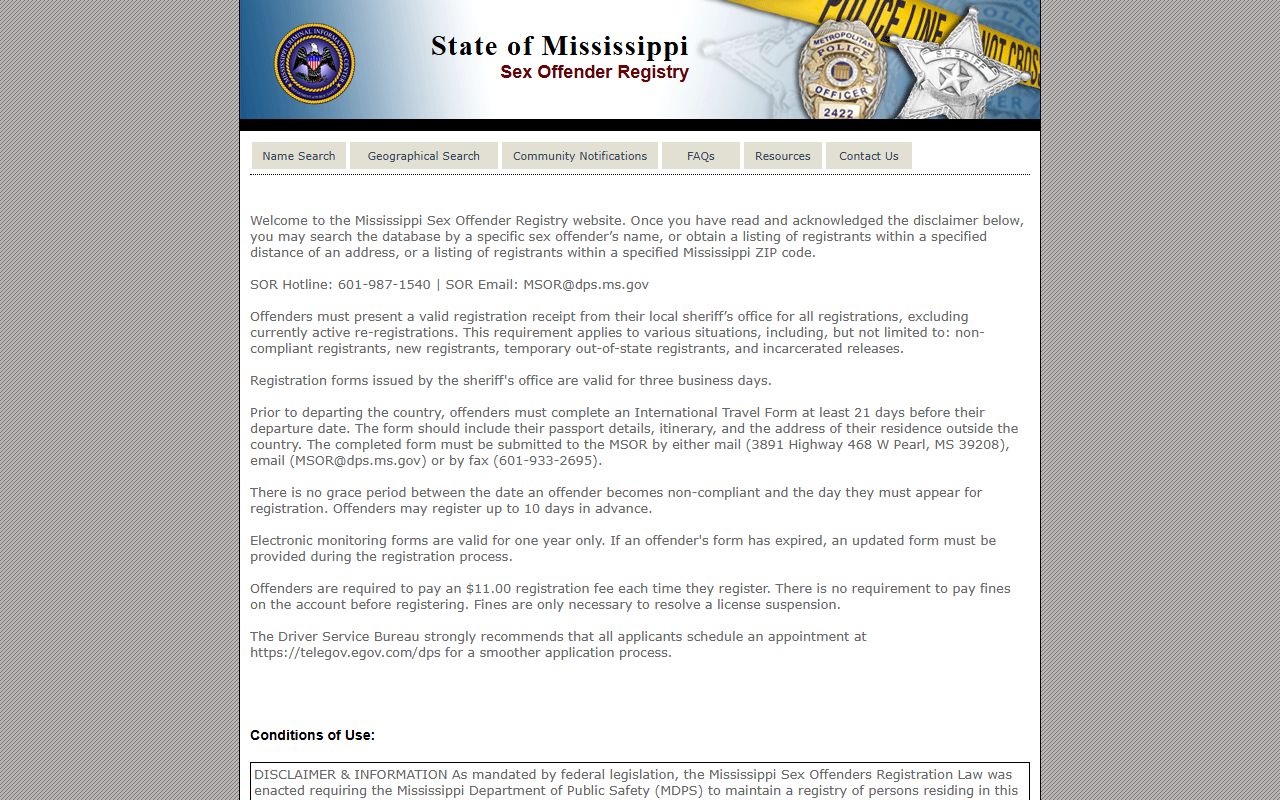
The registry shows registration data, not the underlying charge file. For the charges themselves, return to the court that holds the case or to MDOC for sentenced inmates.
The Arrest and Booking Side of the Record
The arrest record itself sits with the Sheriff Department, not the court. The Sheriff books people into the Sunflower County Jail and posts a current-inmates link on the agency site. Booking detail, custody status, and bond questions come from that office by phone or through the roster. If the online roster will not load, the research-backed advice is simple: call the jail.
The Sheriff Department publishes its menu of inmate pages on its official homepage, including current inmates, court dates, bonds, and phone calls. Recurring court dates are listed there too.
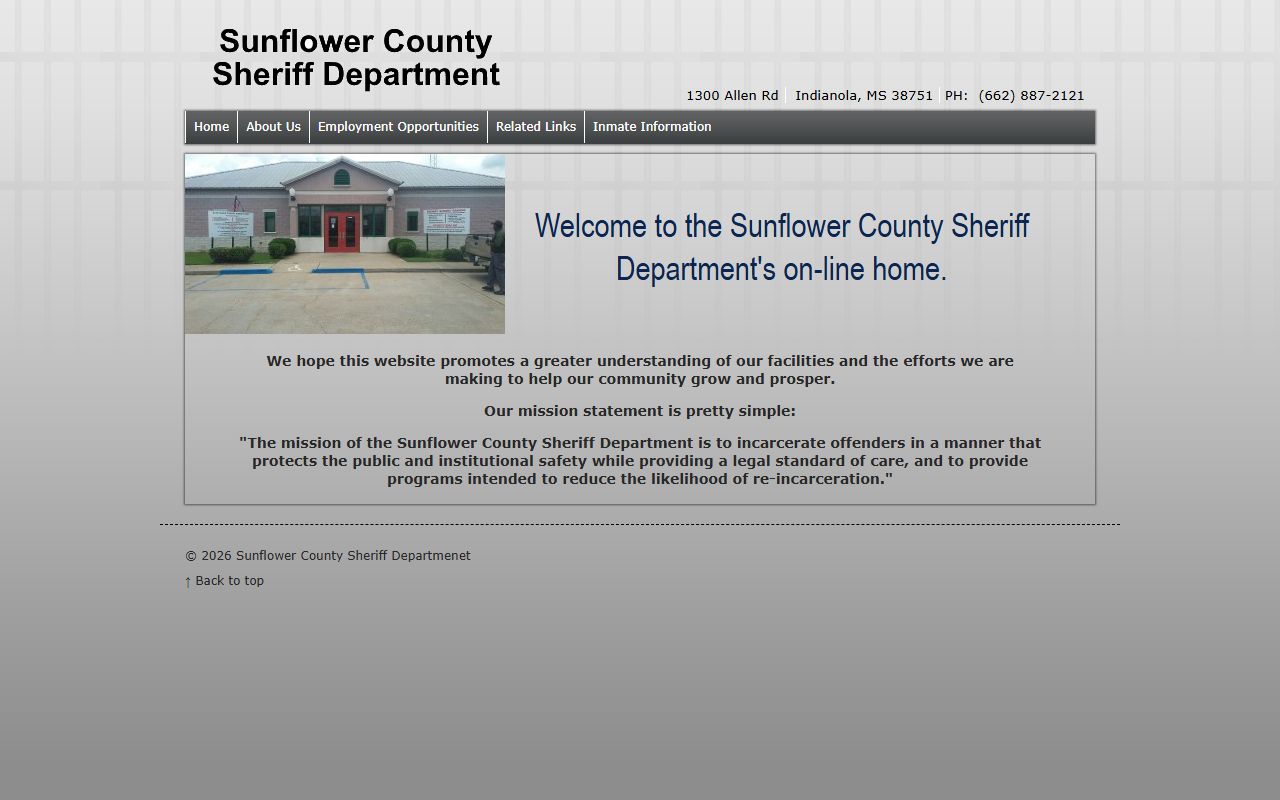
Booking records that are not online can be sought by written request to the Sheriff, subject to law-enforcement exemptions and active-investigation limits. The court charge that follows the booking is a different file in a different office.
Clearing a Sunflower County Charge Record
Some charges can be removed from public access. Mississippi expunction under Miss. Code Ann. Section 99-19-71 allows eligible misdemeanor, felony, dismissed, dropped, no-disposition, and not-guilty cases to be expunged by court order when the criteria are met. The DA office also notes that one conviction may be expunged five years after all sentence terms are completed, with serious offenses excluded.
The statute language is published in official legislative bill text, which sets out who may qualify and how the order works.
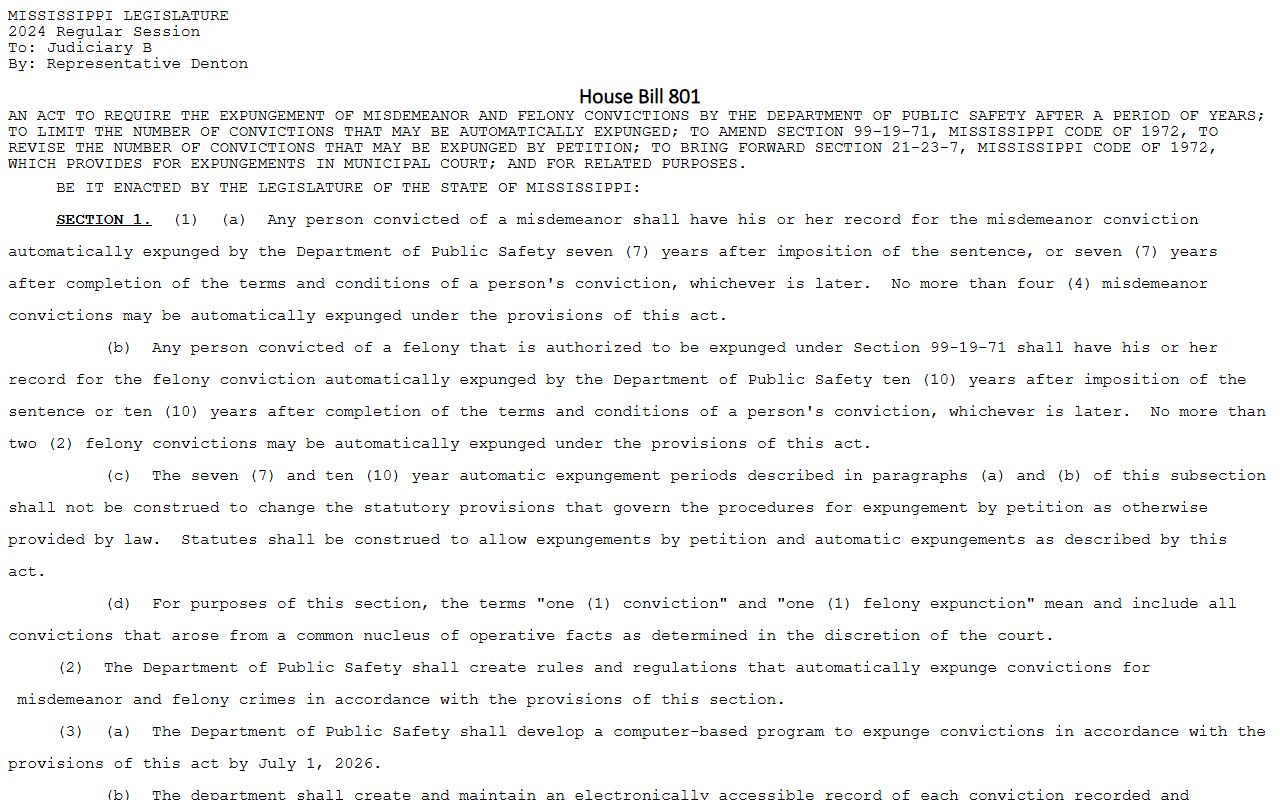
An expungement begins at the court where the charge originated. A petitioner retrieves the charging document, proof of disposition or the sentencing order when it applies, and an account balance sheet showing a zero balance from that clerk. The petition and proposed order are filed there, and a copy is served on the prosecuting authority. The full Section 99-19-71 bill text and the DA expungement materials explain the eligibility limits in detail.
| Sealed | Expunged | |
|---|---|---|
| Visibility | Hidden from public view | Removed and treated as if it never existed |
| Law Enforcement | Limited access remains | Very limited access |
| Eligibility | Certain youth and protected cases | Eligible cases under Sections 99-19-71 and 99-15-26 |
Restricted Arrest Records in Sunflower County
Not every charge record is open to the public. Youth court records are generally confidential under Miss. Code Ann. Sections 43-21-261 and 43-21-255, which restrict records and law-enforcement files involving children. A public page should not treat juvenile charges like adult criminal cases. Access there is limited to parties, certain officials, or court order.
Other limits apply across the board. Expunged charges drop out of public access entirely. Sealed cases stay hidden while the record is preserved. Sensitive identifiers such as Social Security numbers, financial account numbers, minor names, and protected addresses are redacted. Charges tied to an active investigation may be withheld. The Mississippi Public Records Act, Miss. Code Ann. Section 25-61-1 and following, sets the general rule that records are open unless an exemption applies.
Note: a dismissed or expunged charge that no longer appears in public records does not mean an arrest never happened, only that the record is now restricted.
Important: This site is not a consumer reporting agency under the Fair Credit Reporting Act, and its data may not be used for employment, tenant, or credit decisions.