
How to Search Sunflower County Court Records
Sunflower County does not run one combined case-search website for every court. Each clerk keeps its own files, and the Circuit Clerk is unusually direct about how that works. The office states plainly that it has no web-based record search and no online payment. Court records held by the Circuit Clerk come through a written request, not a database query. That request can travel by email, by mail, or be handed across the counter in person.
A useful request is specific. The clerk needs enough detail to find a file among years of paper and electronic entries. Give the party names, the case or cause number if you have it, a filing or hearing date, the charge or claim type, and the document you want. Note whether a plain copy or a certified copy is needed. A vague request can trigger a per-item research fee, because staff must search instead of simply pulling a named file.
- Start with the Circuit Clerk for Circuit Court civil and criminal files, indictments, motions, judgments, liens, and appeals from the lower courts.
- Skip the hunt for a public portal. There is no web-based Circuit Clerk record search and no online payment.
- Put the request in writing with party names, any case number, dates, the record type, and whether you need a certified copy.
- Send it by email to chamilton@suncirclerk.com, by mail to P.O. Box 880, Indianola, MS 38751, or deliver it in person at 200 Main Street.
- Ask about the fee before you assume a price. Costs vary by document type, and a research fee per item may apply.
- Allow up to 14 business days. If no record is found the search fee is not refunded, and if a record turns up with added cost the office will notify you.
The Circuit Clerk lays out this written-request policy on its office services page.
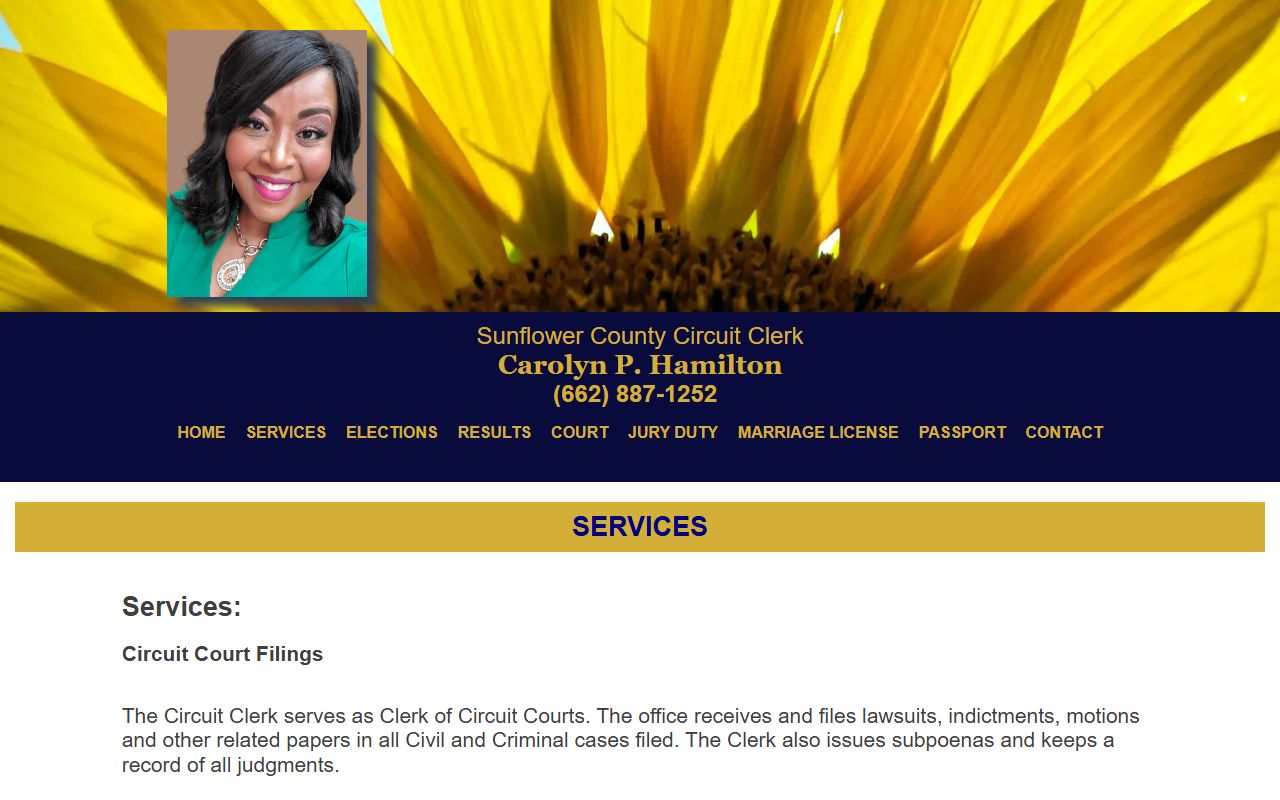
The same page also covers court filings, jury administration, marriage licenses, and passport acceptance, so it doubles as a quick map of what the office handles.
Sunflower County Court Records Search Fields
Because a Circuit Clerk request is written rather than typed into a portal, the search fields are really the details you should include in that letter or email. The more of them you supply, the faster the office can match your request to an actual file. The table below mirrors the information the clerk needs to locate a Sunflower County court record and the format notes the office has published.
| Field Label | Type | Required | Notes / Format |
|---|---|---|---|
| Party / defendant / plaintiff name | Written text | Recommended | Needed to locate the case among the clerk's files. |
| Case number | Written text | Optional but helpful | No public case-number format is published. |
| Court / judge | Written text | Optional | Circuit Court, Fourth Circuit District; a judge docket may identify the judge. |
| Record type | Written text | Recommended | Criminal, civil, judgment, lien, indictment, motion, lower-court appeal, or marriage record. |
| Date range | Written text or date | Recommended | Helpful when no case number is known. |
| Copy type | Written text | Recommended | Plain, certified, or exemplified; not priced in the official source. |
| Delivery method | Written text | Required in practice | Email, mail, or in-person pickup. |
None of these is a strict published form field. They are the practical anchors that turn a written request into a quick retrieval rather than a billable research project.
Where Sunflower County Court Records Are Held
The court that handled a matter decides where its record lives. Felony prosecutions, civil suits at law, and appeals from the lower courts sit with the Circuit Court and the Circuit Clerk. Equity matters belong to Chancery Court. That split runs through everything. A divorce, a will, a guardianship, or a land deed goes to the Chancery Clerk, while a felony file or a money judgment goes to the Circuit Clerk.
The Chancery Clerk maintains an online index for one record category. The county's Chancery land-records portal gives Internet access to the index of Sunflower County land records.
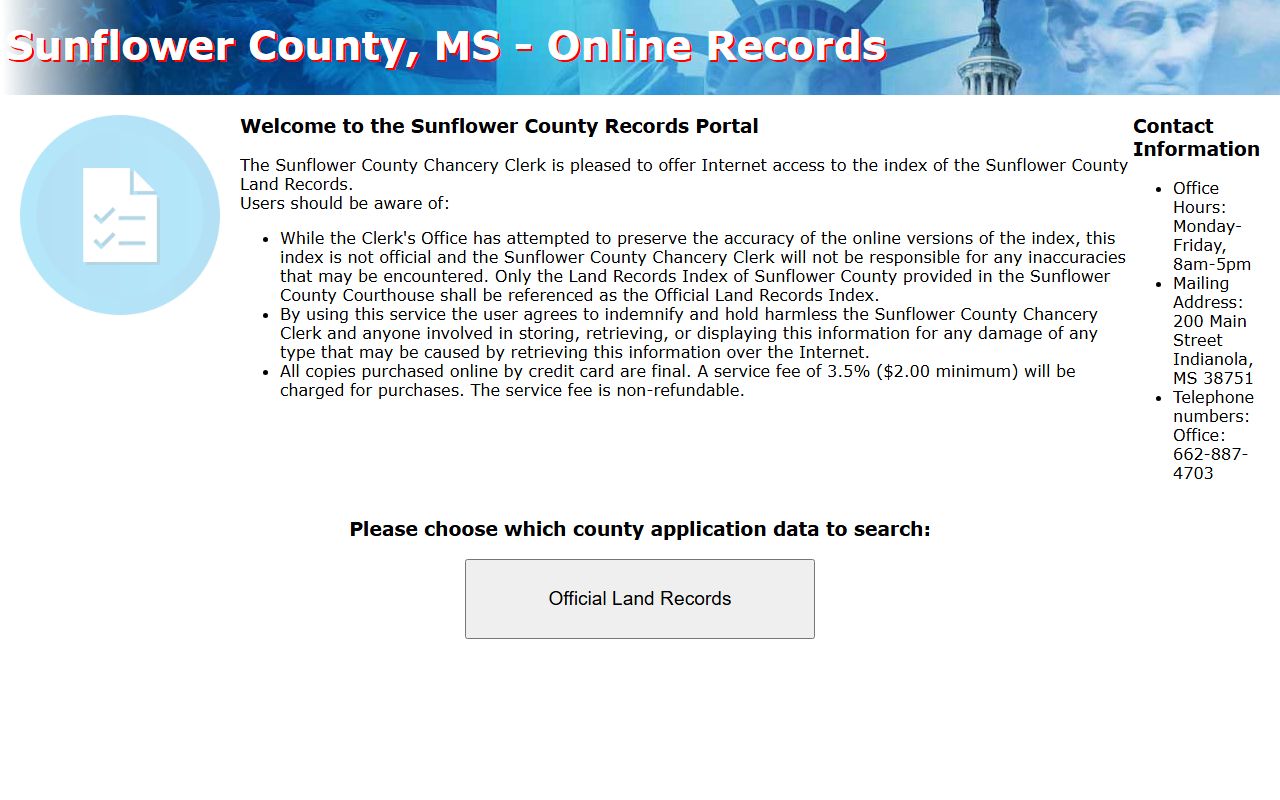
The portal warns that the courthouse Land Records Index remains the official record, and that online copy purchases carry a 3.5 percent service fee with a two-dollar minimum that is not refundable. For probate or divorce files there is no public case-search interface, so those move through a direct request to the Chancery Clerk's office.
Lower-court records split by where the offense happened. Indianola Municipal Court handles traffic and ordinance cases inside the city and links an online citation-payment page on its municipal court page. Justice Court covers misdemeanors, traffic outside city limits, evictions, and small civil claims. The Mississippi Access to Justice court-help site explains that Justice Courts hear civil cases up to $3,500 and do not handle felonies.
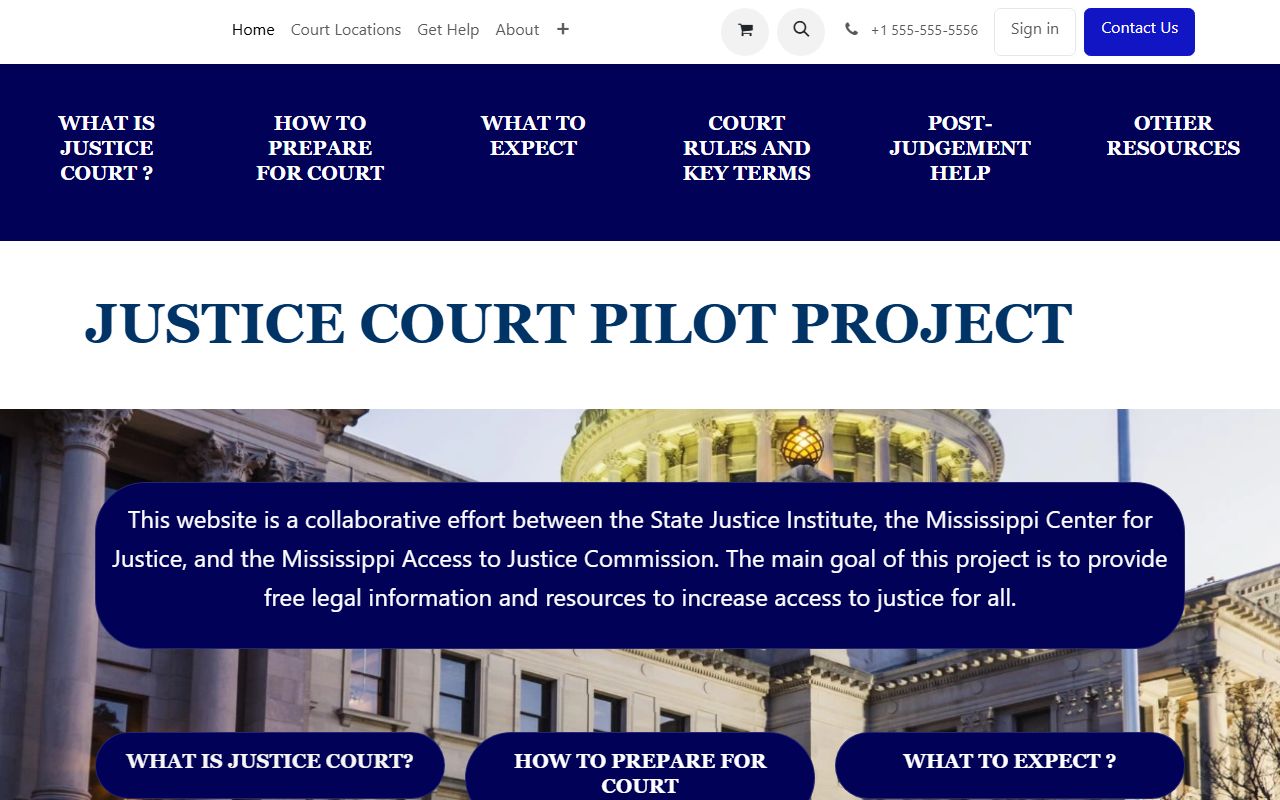
That ceiling matters when you are tracing a case, because a larger civil dispute would never appear in Justice Court files. Recurring hearing dates, including the Circuit Court's first and third Tuesday pattern and the weekly Justice Court setting, are tracked separately in the Sunflower County court dockets.
Mississippi Electronic Courts handles electronic filing for many circuit and chancery courts, and a 2023 state order approved its use in Sunflower Chancery Court. Electronic filing is mainly a tool for courts and attorneys, though. For a member of the public it does not replace the Circuit Clerk's written-request process, which remains the documented route to a Circuit Court file.
Types of Sunflower County Court Records
Record types follow the court that produced them. Circuit Court generates the heaviest criminal and civil files. Chancery Court produces family, probate, and land records. Justice and municipal courts produce traffic, misdemeanor, eviction, and small-claims files. Knowing the category helps you pick the right office before you write a single request.
Civil cases follow a defined procedure, and the Mississippi Rules of Civil Procedure shape what ends up in a civil file.
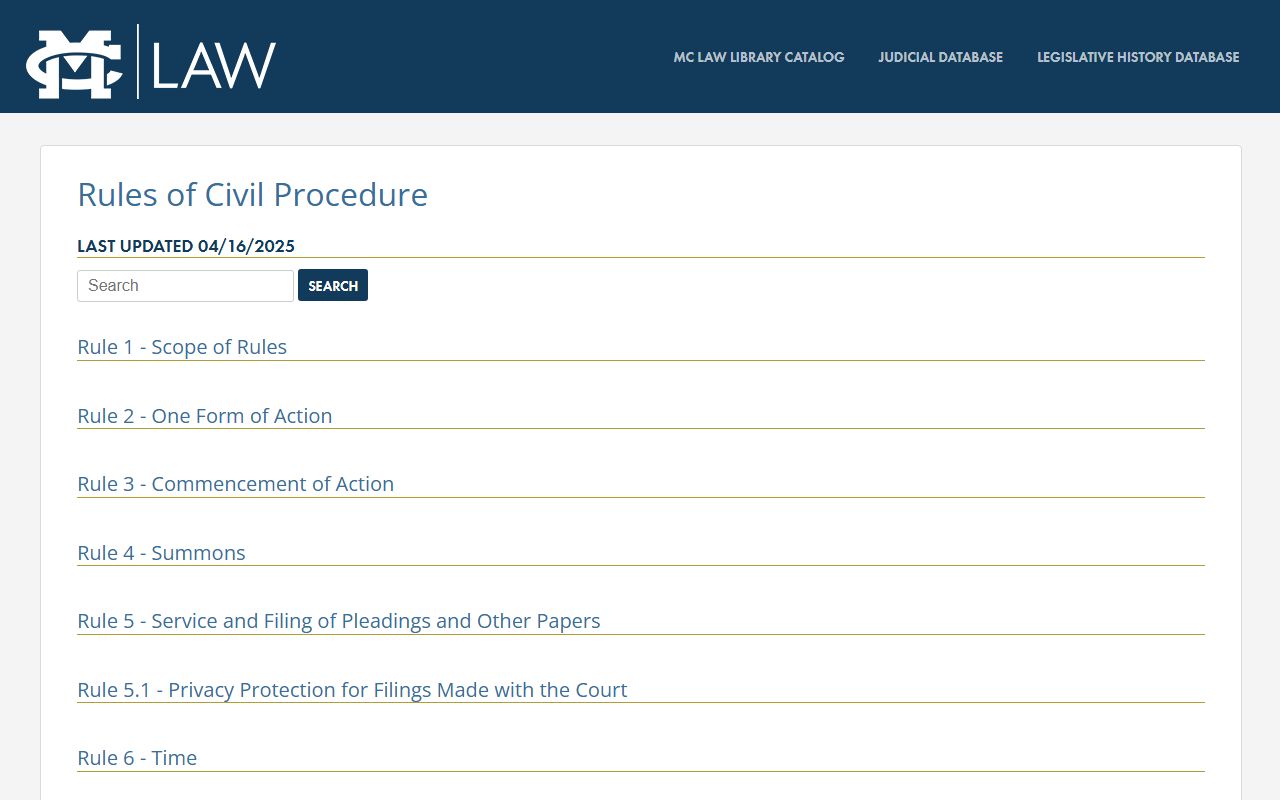
Those rules explain why a civil record carries complaints, answers, motions, and judgments in a predictable order. Criminal files build differently, moving from affidavit or indictment through arraignment, plea, trial, and sentencing.
- Civil Circuit Court records: complaints, answers, motions, judgments, jury records, and post-judgment collection papers.
- Criminal Circuit Court records: indictments, bond orders, plea petitions, verdicts, and sentencing orders.
- Family and domestic records: Chancery Court divorce, custody, and related matters, subject to confidentiality limits.
- Probate and estate records: wills, letters testamentary, inventories, guardianships, and conservatorships.
- Traffic and municipal records: citations and ordinance cases handled by Indianola Municipal Court.
- Justice Court records: misdemeanors, out-of-city traffic, evictions, and civil claims up to $3,500.
What Sunflower County Court Records Show
A court record is more than a verdict. It captures who was involved, what was filed, when each step happened, and how the case ended. The visible fields are consistent across criminal and civil files, drawn from the captions, dockets, and orders the clerk keeps. The table pairs each common field with what it tells a reader.
| Field | What It Shows |
|---|---|
| Case / cause number | The court's case-identification number, required on petitions and court forms. |
| Court and county | Which court holds the matter, such as the Circuit Court of Sunflower County. |
| Party names | Plaintiff and defendant, or petitioner and respondent; State of Mississippi versus the defendant in criminal cases. |
| Defendant identifiers | Date of birth, race and gender, charge, offense and arrest dates; Social Security numbers are redacted on public copies. |
| Filing and disposition dates | When the case was filed, indicted, sentenced, or otherwise resolved. |
| Docket events | Filings, motions, indictments, subpoenas, hearings, pleas, sentencing orders, and dismissals. |
| Financials | Court fines, fees, assessments, restitution, bond, and copy costs. |
| Record status | Pending, dismissed, convicted, disposed, expunged, or sealed. |
The disposition and status fields carry the most weight. A charge filed is not a conviction, and a dismissal closes a matter without a finding of guilt. The full criminal case file, with pleas, verdict, and sentence, is detailed in the Sunflower County criminal court records.
Note: Public copies of Sunflower County court records redact Social Security numbers and similar identifiers, so a released file may not show every detail in the clerk's original.
Public Access to Sunflower County Court Records
Mississippi treats court and government files as open by default. The Mississippi Public Records Act, found at Section 25-61-1 and following, makes the records of public bodies available for inspection unless an exemption applies. A companion provision at Section 25-61-5 requires each public body to set a procedure and bars it from delaying production beyond the statutory limit without a legal basis.
Open by default does not mean instant. For a Sunflower County file you start with the office that keeps it: the Circuit Clerk for criminal, civil, judgment, and marriage records; the Chancery Clerk for probate, divorce, and land records; the issuing municipal court for city traffic citations. The Circuit Clerk's policy is the clearest local rule, with written requests only, fees that vary by document type, a possible per-item research fee, and a 14-business-day window when the record is available.
Important: Open access still bends around redaction. Social Security numbers, financial account numbers, minor names, and protected addresses are removed before a record is released to the public.
Sealed and Confidential Court Records
Some Sunflower County court records are closed even though most are open. Youth court files are generally confidential. Section 43-21-261 keeps records involving children private except for narrow statutory disclosures and court orders, and Section 43-21-255 restricts how law-enforcement records about children are shared. Adoption is sealed as well. Section 93-17-25 makes adoption proceedings confidential and heard in closed court.
Expungement removes an eligible record from public view by court order. Section 99-19-71 allows expunction for qualifying misdemeanor, felony, dismissed, dropped, no-disposition, and not-guilty cases when the criteria are met. A petitioner gathers the charging document, proof of disposition or the sentencing order, and a zero-balance statement from the clerk where the charge began, files the petition there, and serves the prosecuting authority. Mental health commitment files, handled in Chancery Court, carry sensitive medical detail and should be treated as restricted until the clerk confirms access.
To view a record that has been sealed, a person usually must show a legal interest and obtain a court order. Asking the clerk who holds the original file is the practical starting point.
Federal and Statewide Record Options
Not every case touching a Sunflower County resident sits in a county clerk's office. Federal criminal and civil matters from this region run through the U.S. District Court for the Northern District of Mississippi. Those dockets and documents are reached through PACER and the court's ECF system, which requires a registered account.
A free research alternative covers many published opinions and dockets. CourtListener collects federal and state court material at no cost.
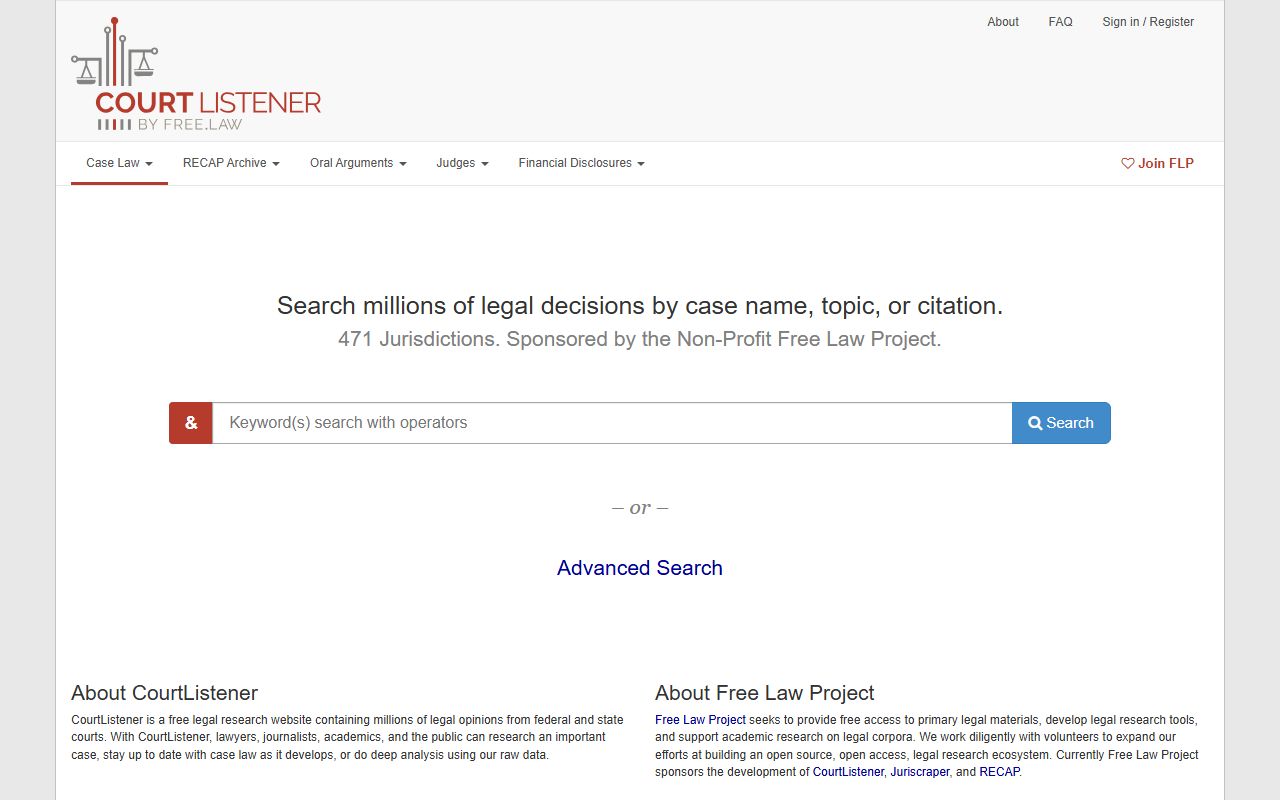
It will not return a sealed Sunflower County file or a clerk's paper docket, but it helps when you are tracing how a reported case was decided or checking an appellate outcome.
In-Person Court Record Requests
When a request needs a certified copy or fast turnaround, the counter is often the best option. The Circuit Clerk works from the county courthouse in downtown Indianola during weekday business hours. Bring the case details you have, a form of identification, and a way to pay, since fees vary by document type and are confirmed at the office. Plain and certified copies are handled there.
Sunflower County Circuit Clerk
200 Main Street
Indianola, MS 38751
662.887.1252
Mon-Fri, 8:00 a.m. to 4:30 p.m.