
How to Search Sunflower County Court Records
Sunflower County does not run one combined search site for every court. The way you find a record depends on the type of case and the court level that handled it. Felony and civil trial files run through the Circuit Clerk. Divorce, probate, and land matters run through the Chancery Clerk. City tickets sit with the municipal court, and lower-level county matters sit with Justice Court. Sorting the case type first saves a wasted trip.
The most important local rule shapes every search. The Circuit Clerk does not offer a public web search and does not take online payment. Requests for Circuit Court files must be made in writing and submitted by email, mail, or in person. A clear, detailed request lets the office locate the file faster, and the office answers within fourteen business days when the record is available. The county homepage at sunflowercounty.ms.gov links the offices and officials a searcher will need.
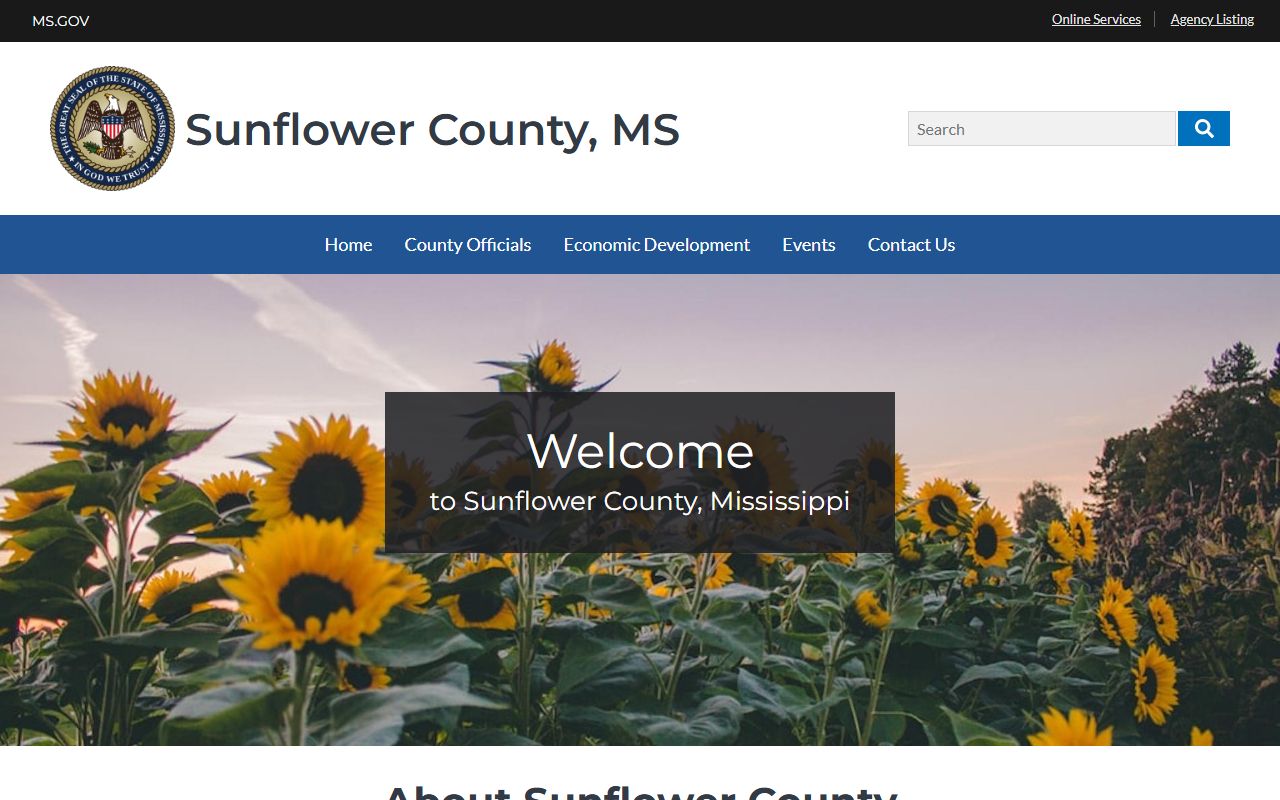
That official county portal gathers the clerk, sheriff, and court contacts in one place. From there, a written Circuit Clerk request follows a simple order.
- Decide which court holds the file: Circuit, Chancery, Justice, or municipal.
- Gather the party names, a case number if you have one, and the filing or hearing date.
- Write the request, naming the document you want and whether you need a plain or certified copy.
- Send it to the Circuit Clerk by email, by mail, or in person at the courthouse.
- Ask about the fee first, since costs vary by document and a research fee may apply.
The Sunflower County Court System
Mississippi places appellate courts at the top, general trial courts in the middle, and limited courts at the local level. Sunflower County felony and civil trials belong to the Circuit Court, part of the Fourth Circuit District shared with Leflore and Washington Counties. Equity matters such as divorce, custody, probate, and land disputes belong to Chancery Court. Below them, Justice Court and the municipal courts handle smaller cases.
There is no separate Sunflower County "county court." Appeals from the local courts move up to Circuit Court, and a felony charge reaches a grand jury before any Circuit Court trial. State appeals then go to the Court of Appeals or the Supreme Court. The Mississippi Judiciary site at courts.ms.gov is the entry point for the statewide system.
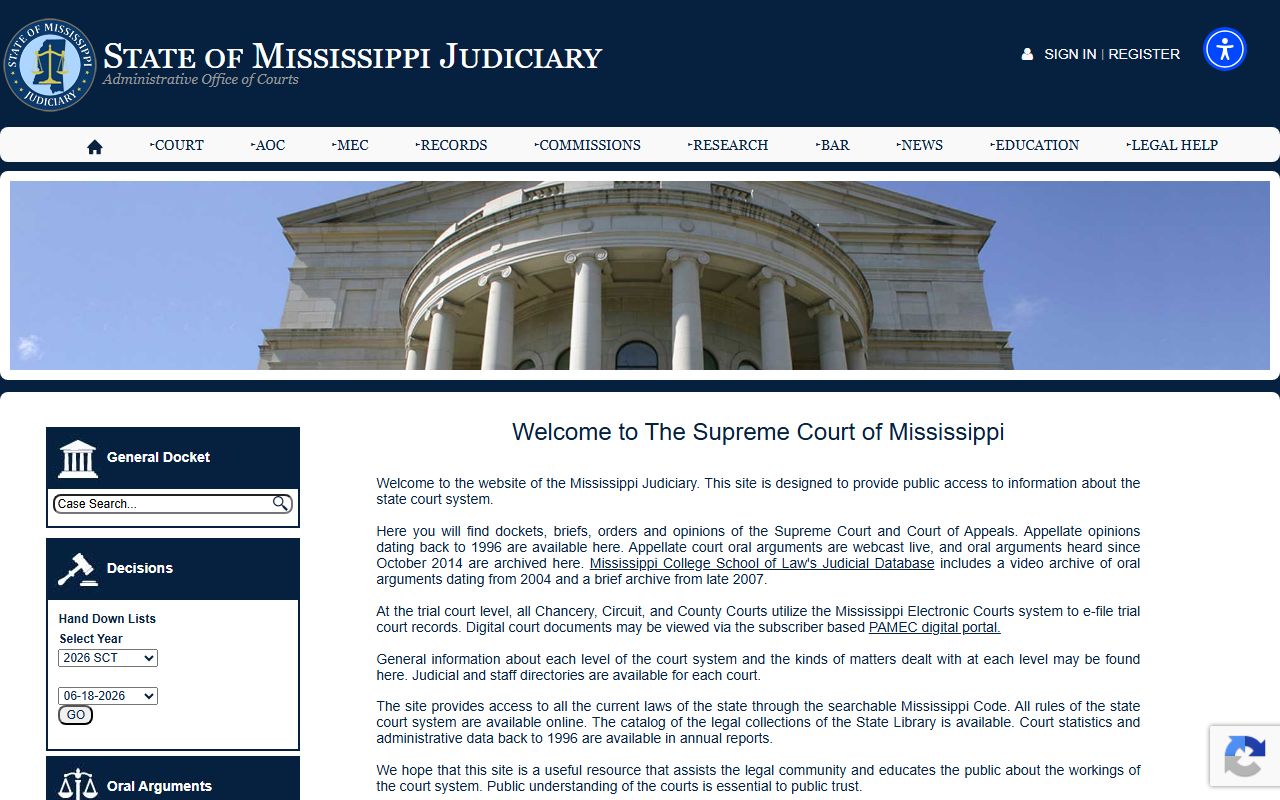
That state portal links each court tier that a Sunflower County case can touch. The path a case follows is short to describe.
Case flow: Justice / Municipal Court › Circuit Court › Court of Appeals › Supreme Court
| Court | Jurisdiction | Case Types |
|---|---|---|
| Mississippi Supreme Court | Court of last resort | Final appeals, court supervision |
| Court of Appeals | Intermediate appellate | Appeals assigned by the Supreme Court |
| Circuit Court | General trial | Felonies, civil suits at law, lower-court appeals |
| Chancery Court | Equity and domestic | Divorce, custody, probate, guardianship, land |
| Justice Court | Limited county | Misdemeanors, rural traffic, evictions, small claims |
| Municipal Court | City | City ordinance and city traffic cases |
Note: The Fourth Circuit District covers three Delta counties, so a Sunflower County criminal case may share a judge whose other dockets sit in Greenville or Greenwood.
Types of Court Records in Sunflower County
Sunflower County Court records cover the full range of cases the Delta brings to court. Circuit Court produces felony criminal files and civil suits at law. Chancery Court produces divorce, custody, adoption, probate, and guardianship files along with the land record index. Justice Court and the municipal courts add misdemeanor, traffic, eviction, and small-claims records. The Mississippi Bar explains how these jurisdictions divide at msbar.org.
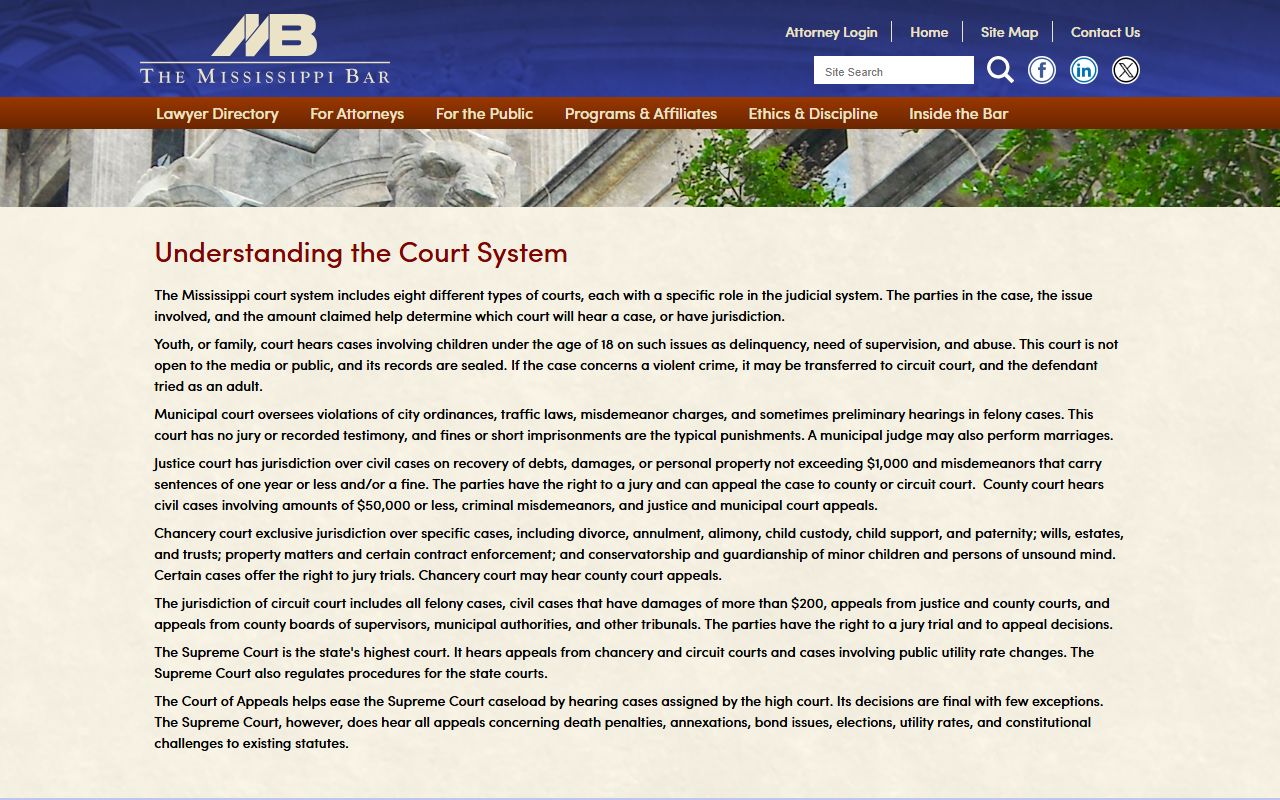
That explainer is a plain-language guide to which court hears what. The main record categories in Sunflower County break down this way.
- Criminal records - Felony case files in Circuit Court, plus misdemeanors in Justice and municipal courts.
- Civil records - Lawsuits at law, judgments, and liens kept by the Circuit Clerk.
- Family and divorce records - Divorce, custody, and domestic matters heard in Chancery Court.
- Probate records - Wills, estates, guardianships, and conservatorships through the Chancery Clerk.
- Traffic records - City citations in municipal court and rural citations in Justice Court.
Where Each Sunflower County Record Is Filed
Sunflower County uses split clerk offices, and that split decides where a search begins. The Circuit Clerk, Carolyn Hamilton, is the clerk of record for all Circuit Court criminal and civil cases, marriage licenses, and jury matters. The Chancery Clerk, Gloria McIntosh, keeps divorce, probate, land, and Board of Supervisors records. Both offices share the courthouse at 200 Main Street, yet they handle different files, so naming the case type first prevents a misrouted request.
Lower courts add two more counters. Justice Court handles county misdemeanors, rural traffic, evictions, and civil claims up to the state limit. Indianola Municipal Court handles city ordinance and traffic cases. The comparison below maps the four trial-level venues.
| Court | Office to ask | Handles |
|---|---|---|
| Circuit Court | Circuit Clerk | Felonies, civil suits at law, lower-court appeals |
| Chancery Court | Chancery Clerk | Divorce, probate, guardianship, land records |
| Justice Court | Justice Court Clerk | Misdemeanors, rural traffic, evictions, small claims |
| Municipal Court | City court clerk | City ordinance and city traffic citations |
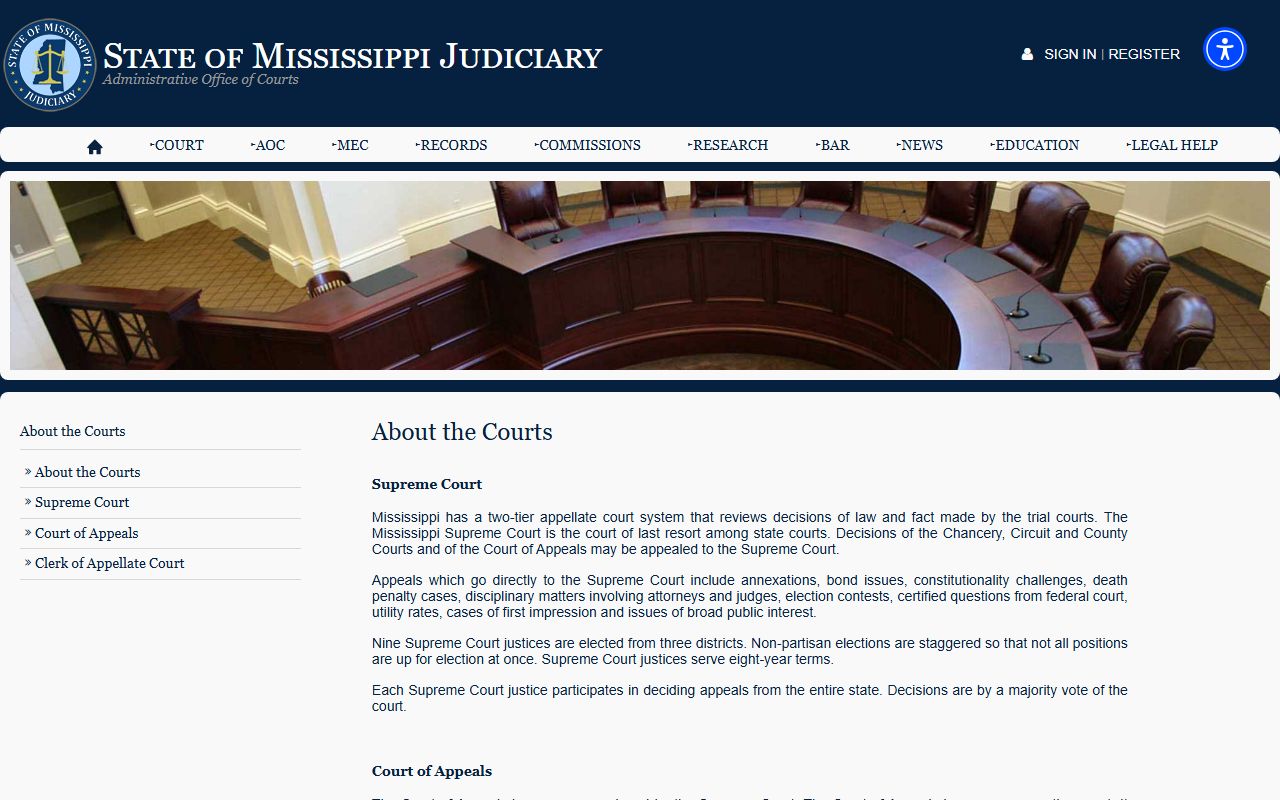
The Mississippi Judiciary overview of the courts at courts.ms.gov sets out the same divisions statewide. A reader who matches the case to the office in this table can skip the guesswork and write directly to the right clerk.
What Sunflower County Court Records Show
A Sunflower County court file is built from many entries, and the visible fields are fairly consistent across courts. A criminal file names the State of Mississippi against a defendant. A civil file names a plaintiff and a defendant. Each file carries a cause number, filing dates, the assigned judge, and a running list of motions, hearings, and orders. Public copies redact Social Security numbers and other protected identifiers.
| Field | What It Shows |
|---|---|
| Case Number | The cause number the clerk uses to track the file. |
| Filing Date | When the complaint, indictment, or petition was entered. |
| Parties | Plaintiff and defendant, or petitioner and respondent. |
| Charges / Cause | The criminal charge or the civil claim being decided. |
| Disposition | The outcome, such as guilty plea, verdict, or dismissal. |
| Sentence / Judgment | The penalty or the final ruling on liability. |
Many fields use shorthand a first-time reader may not know. A short glossary covers the terms that appear most often in Sunflower County Court records.
- Plaintiff
- The person or entity that starts a civil lawsuit.
- Defendant
- The person accused in a criminal case or sued in a civil case.
- Indictment
- A grand-jury charging document required for a felony prosecution.
- Disposition
- The final outcome recorded for a case or a charge.
- Docket
- The dated list of filings, settings, and events in a case.
- Capias
- An order to take a person into custody, often after a missed court date.
The Circuit Clerk Written Record Search
The Circuit Clerk states plainly that the office has no web-based record search and no online payment. Every Circuit Court record request must be written and presented by email, mail, or in person. The office asks requesters to describe the documents in specific detail so staff can locate them, and it assesses a research fee per item when a request gives no useful detail. Requests are honored within fourteen business days when the record is available. The full policy is posted on the Circuit Clerk services page at sunflowercircuitclerk.com.
There is no published online form, so the fields below describe what a written request should contain. Including the strongest identifiers shortens the search.
| Field | Type | Required | Notes |
|---|---|---|---|
| Requester name | text | Yes | Needed so the office can reply. |
| Contact information | text | Yes | Email, mailing address, or phone. |
| Party / case name | text | Strongly recommended | Specific detail helps locate the file. |
| Case number | text | If known | No public format is published. |
| Document type sought | text | Yes | Lawsuit, indictment, judgment, lien, marriage record. |
| Date range | text/date | Recommended | Useful when no case number is known. |
| Delivery method | text | Yes | Email, mail, or in-person pickup. |
Note: The Circuit Clerk does not refund the search fee when no record is found, so confirm the fee and supply specific case detail before you send any payment.
Public Access Laws for Sunflower County Court Records
Mississippi treats most court and government files as open records. The Mississippi Public Records Act sets the general right to inspect, while other statutes carve out protections for juveniles, adoptions, and expunged matters. The Mississippi Ethics Commission hosts the Public Records Act text at ethics.ms.gov, the agency that fields public-records disputes statewide.
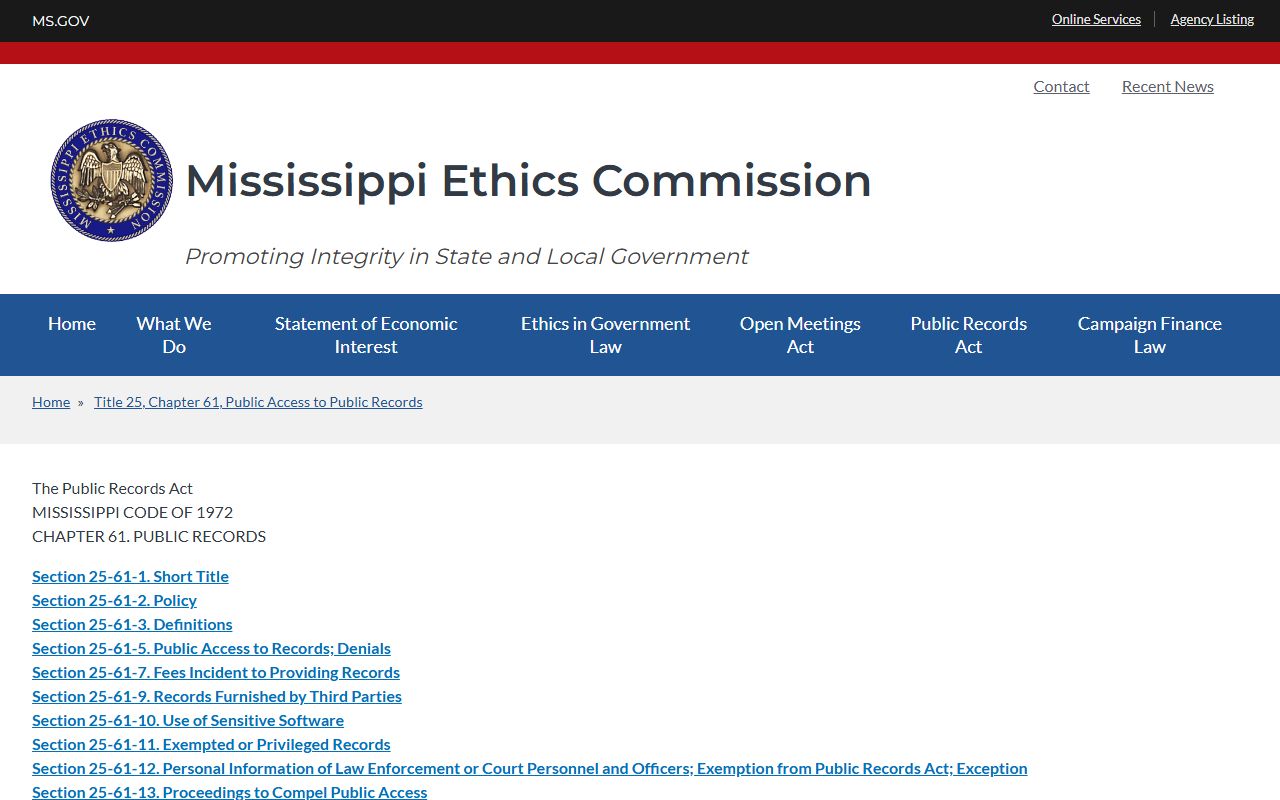
That overview frames how access works before any exemption applies. The statutes below shape what a Sunflower County searcher can and cannot see.
Key Statutes:
Miss. Code § 25-61-1 et seq. - Public records of public bodies are open for inspection unless an exemption applies.
Miss. Code § 25-61-5 - Public bodies must set a response procedure and cannot delay production without legal basis.
Miss. Code § 99-19-71 - Eligible cases may be expunged by court order, removing them from public access.
Miss. Code § 43-21-261 - Records involving children in youth court are generally confidential.
Miss. Code § 93-17-25 - Adoption proceedings are confidential and generally closed to the public.
Restricted and Confidential Court Records
Not every Sunflower County court file is open. Youth court records are generally confidential and should never be treated as searchable like adult criminal cases. Access may exist for parties, guardians, appropriate agencies, or by court order, but the public path is closed by statute. Adoption proceedings are likewise heard in closed court and stay sealed unless a judge orders otherwise.
Expunged and sealed records leave the public view once a court signs the order. To clear an eligible record, a person files in the court where the charge began, attaches proof of disposition and a zero balance, and serves a copy on the prosecuting authority. Mental-health commitment files held in Chancery Court contain private medical detail and are restricted as well. Social Security numbers, financial account numbers, and minor names are redacted from public copies across all courts.
Specialty Courts in the Fourth Circuit District
The Fourth Circuit District that includes Sunflower County has a history of problem-solving court work. Mississippi Judiciary archives document Fourth Circuit and Delta Drug Court activity, including a graduation presided over by a circuit judge with a drug court coordinator. These programs offer supervised alternatives for eligible participants rather than a standard trial path.
The District Attorney also runs a pre-trial diversion program for the three-county district. Diversion is administered through the prosecutor's office, and eligibility is decided case by case, so a defendant or attorney should contact the District Attorney's Indianola office for current criteria. The Ninth Chancery Court adds youth-court initiatives, though those are support programs and not public record-search systems.
Sunflower County Sheriff and Jail
The Sunflower County Sheriff Department, led by Sheriff James Haywood, runs the county jail at 1300 Allen Road in Indianola, separate from the courthouse. The official site at sunflowersheriffoffice.org carries inmate information, court dates, visitation, and a current-inmates link. That roster link has shown an expired security certificate, so a caller who cannot reach it should phone the jail at 662.887.2121 for custody and bond status.
The sheriff page also lists local court rhythms that explain courthouse traffic: Circuit Court meets the first and third Tuesday of each month, and Justice Court meets every Tuesday. For the full roster details, see the Sunflower County inmate records page, and for active warrants and failure-to-appear questions, see the warrant records page.
Note: No official Sunflower County Sheriff mobile app was found, so custody questions go through the sheriff website, the jail phone line, or an in-person visit at 1300 Allen Road.
Marriage, Divorce, and Chancery Court Records
Marriage and divorce records split between two offices in Sunflower County. The Circuit Clerk issues marriage licenses and keeps the local marriage record. Divorce is a Chancery Court matter, so divorce decrees and case files come from the Chancery Clerk. The Ninth Chancery Court Subdistrict Two site at 9thchancerymssub2.com describes the court that hears Sunflower County equity cases, and certified state marriage copies can also be ordered from the Department of Health at msdh.ms.gov.
Probate also runs through Chancery Court, covering wills, estates, guardianships, and conservatorships. The land record index sits online at duprocess.sunflowerms.net, though the portal warns that the courthouse index remains the official one. A few probate terms appear in nearly every estate file.
- Testator
- A person who leaves a valid will at death.
- Executor
- The person named in a will to settle the estate.
- Conservator
- A person appointed to manage the affairs of an incapacitated adult.
For the application steps and copy options, see the marriage and divorce records page and the Chancery Court records page.
Sunflower County Court Record Fees
Costs for Sunflower County Court records are not posted as a single fixed schedule. The Circuit Clerk states that record-search fees vary by document type and asks requesters to confirm the charge before assuming a cost. A research fee per item may apply when a request lacks detail. The one firmly published price is the marriage license, which the Circuit Clerk lists as cash only.
| Item | Amount |
|---|---|
| Marriage license | $35 |
| Certified marriage copy (included) | $17 |
| Total marriage license due | $52 cash |
| Circuit Clerk record search | Varies by document |
| Research fee per item | Charged when detail is lacking |
Chancery Clerk copies bought online by credit card carry a 3.5 percent service fee with a two-dollar minimum, and that service fee is not refunded. Probate and divorce copy prices are not posted online, so the Chancery Clerk should be contacted directly for those amounts.
Visiting the Sunflower County Courthouse
In-person records work in Sunflower County centers on the courthouse at 200 Main Street in Indianola. Both the Circuit Clerk and the Chancery Clerk keep counters there, which makes it the practical first stop for criminal, civil, probate, and land files. The Circuit Clerk window is open weekday mornings and afternoons, and a marriage-license applicant should arrive well before closing so staff have time to issue the license.
The Circuit Clerk uses a separate mailing box for written requests, while the county and Chancery Clerk use another, so check the address before mailing. A juror reporting for service is told not to bring electronic devices, a useful entry warning for anyone heading inside.
History of the Sunflower County Courthouse
Sunflower County was formed on February 15, 1844, from Bolivar County and named for the Sunflower River. The first county seat stood at McNutt before county government settled in Indianola, where the courthouse at 200 Main Street remains the seat of local justice today. The county's legal history is bound up with the civil-rights movement of the Delta.
Fannie Lou Hamer's America documents the Indianola courthouse as a civil-rights driving-tour stop at fannielouhamersamerica.com. The project notes that the present courthouse is not the same building Hamer faced in 1962, yet the site still serves as the county seat.
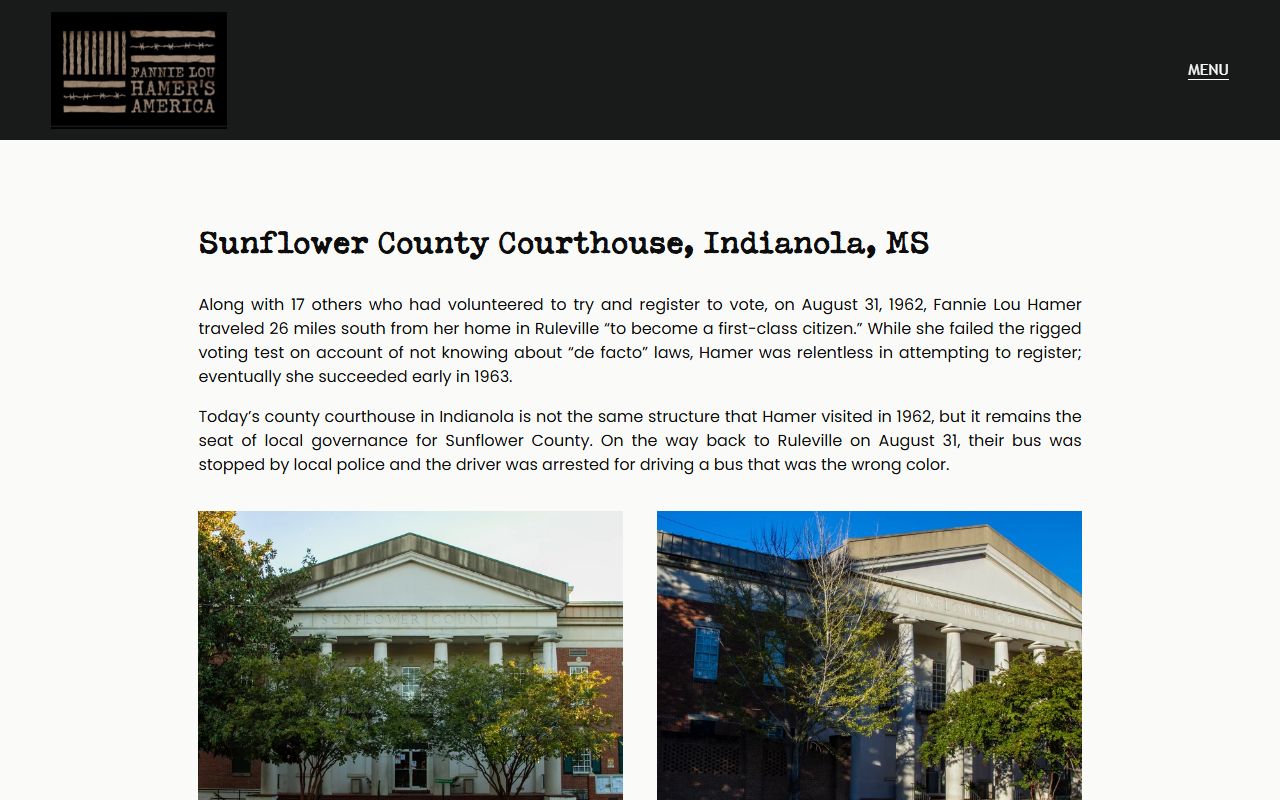
That history page ties the courthouse to the voter-registration struggle of the 1960s. A historical marker honoring the Voting Rights Act adds a later chapter to the story.
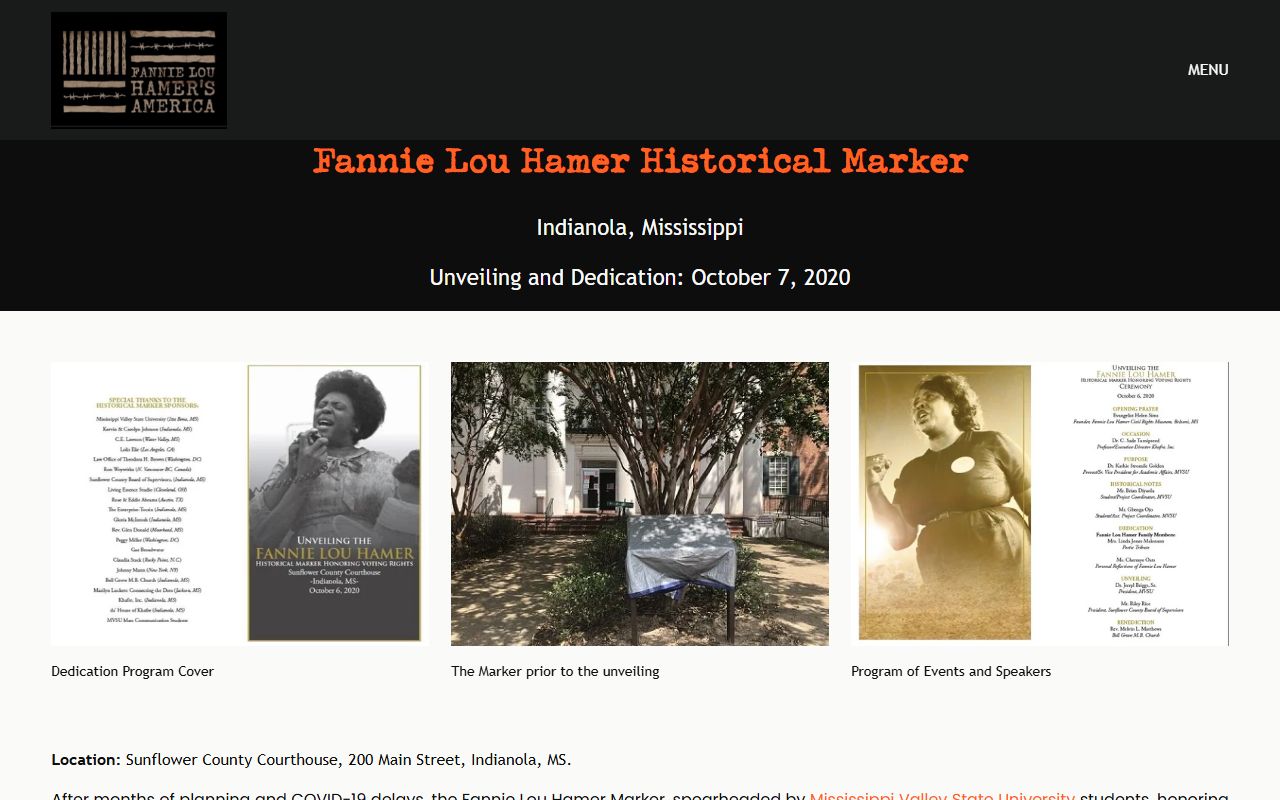
The marker page at fannielouhamersamerica.com records that the Fannie Lou Hamer marker was unveiled at the courthouse on October 6, 2020. The building that holds Sunflower County Court records now carries that public memory alongside its daily docket.
Sunflower County Communities and Court Days
Sunflower County reaches across the Delta, with Indianola as its seat and largest city. The District Attorney lists the county municipalities as Indianola, Ruleville, Drew, Moorhead, Inverness, and Sunflower. A city ticket is handled by that city's municipal court, while rural matters move to Justice Court, which is why a searcher should know where an incident happened. Current population and geography figures come from the U.S. Census at census.gov.
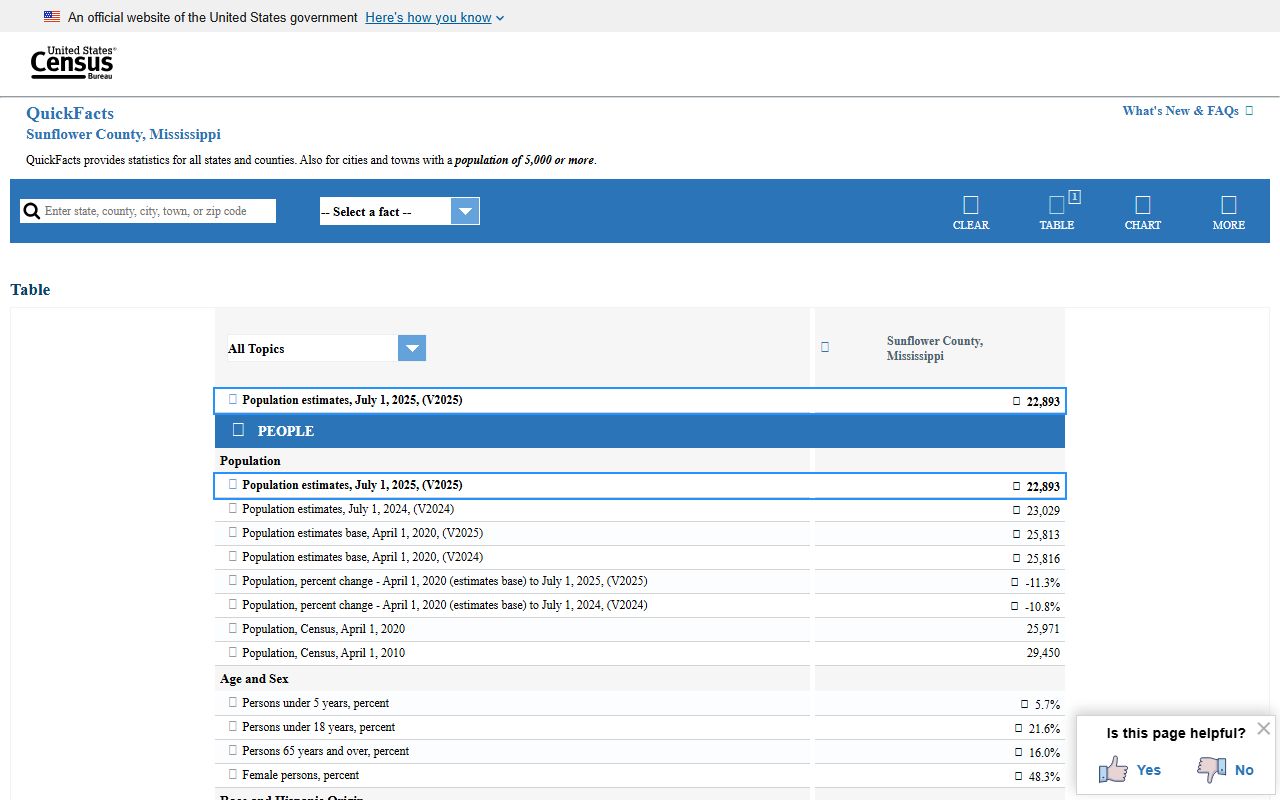
Those figures help frame how busy the courthouse counters can be. The county also points residents toward workforce and economic resources, including its Work Ready Communities profile at workreadycommunities.org.
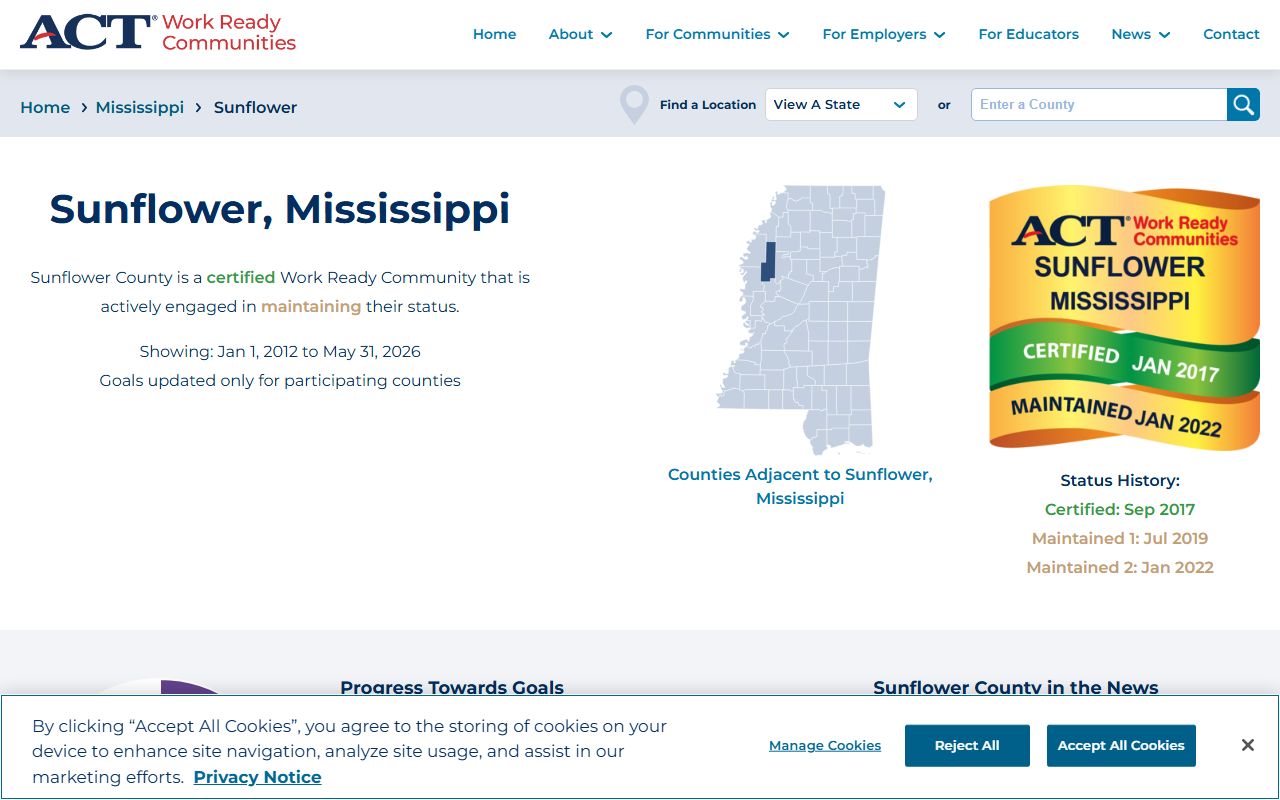
That certification reflects the county's effort to connect residents with steady work. Regional development is coordinated through Delta Strong at deltastrong.ms.

Delta Strong ties Sunflower County into a wider Delta economic network. For the courthouse itself, the rhythm is steady and easy to remember: Circuit Court meets the first and third Tuesday of the month, and Justice Court meets every Tuesday, so Tuesdays draw the heaviest crowds.
Frequently Asked Questions
Can I search Sunflower County Court records online?
There is no public online search for Circuit Court files. The Circuit Clerk has no web-based record search and takes no online payment. A request must be written and sent by email, mail, or in person. The Chancery Clerk offers an online land-record index, but it is not a probate or divorce case search, and the courthouse index remains the official one.
How long does a Circuit Clerk records request take?
The Circuit Clerk honors written requests within fourteen business days when the record is available. A detailed request with party names, dates, and the exact document speeds the search. If the office cannot find the record, it notifies the requester, and the search fee is not refunded.
Which clerk holds the file I need?
Circuit Court criminal, civil, judgment, and marriage records go to the Circuit Clerk. Divorce, probate, guardianship, and land records go to the Chancery Clerk. City traffic and ordinance cases sit with the municipal court, and rural traffic, evictions, and small claims sit with Justice Court. Matching the case type to the office first prevents a misrouted request.
How much does a record copy cost?
Circuit Clerk record-search fees vary by document type, and a research fee may apply when a request lacks detail, so confirm the cost first. A marriage license is $52 cash, made up of a $35 license fee and a $17 certified copy. Chancery online copies add a 3.5 percent service fee with a two-dollar minimum.
Where is the Sunflower County Courthouse?
The courthouse is at 200 Main Street in Indianola, the county seat. Both the Circuit Clerk and the Chancery Clerk keep offices there. The Sheriff Department and county jail are separate, at 1300 Allen Road in Indianola. Mailing addresses differ by office, so check the correct box before sending a written request.
How do I check on someone in the county jail?
The Sheriff site links a current-inmates roster, but that page has shown an expired security certificate. If it will not load, call the jail at 662.887.2121 for custody, bond, and court-date information. For sentenced state inmates, the Department of Corrections runs a separate statewide search.
Are youth and adoption records public?
No. Youth court records are generally confidential under Mississippi law, and adoption proceedings are heard in closed court and stay sealed. Expunged and sealed records also leave public view once a judge signs the order. Public copies of open files still redact Social Security numbers, financial accounts, and minor names.